


Guide
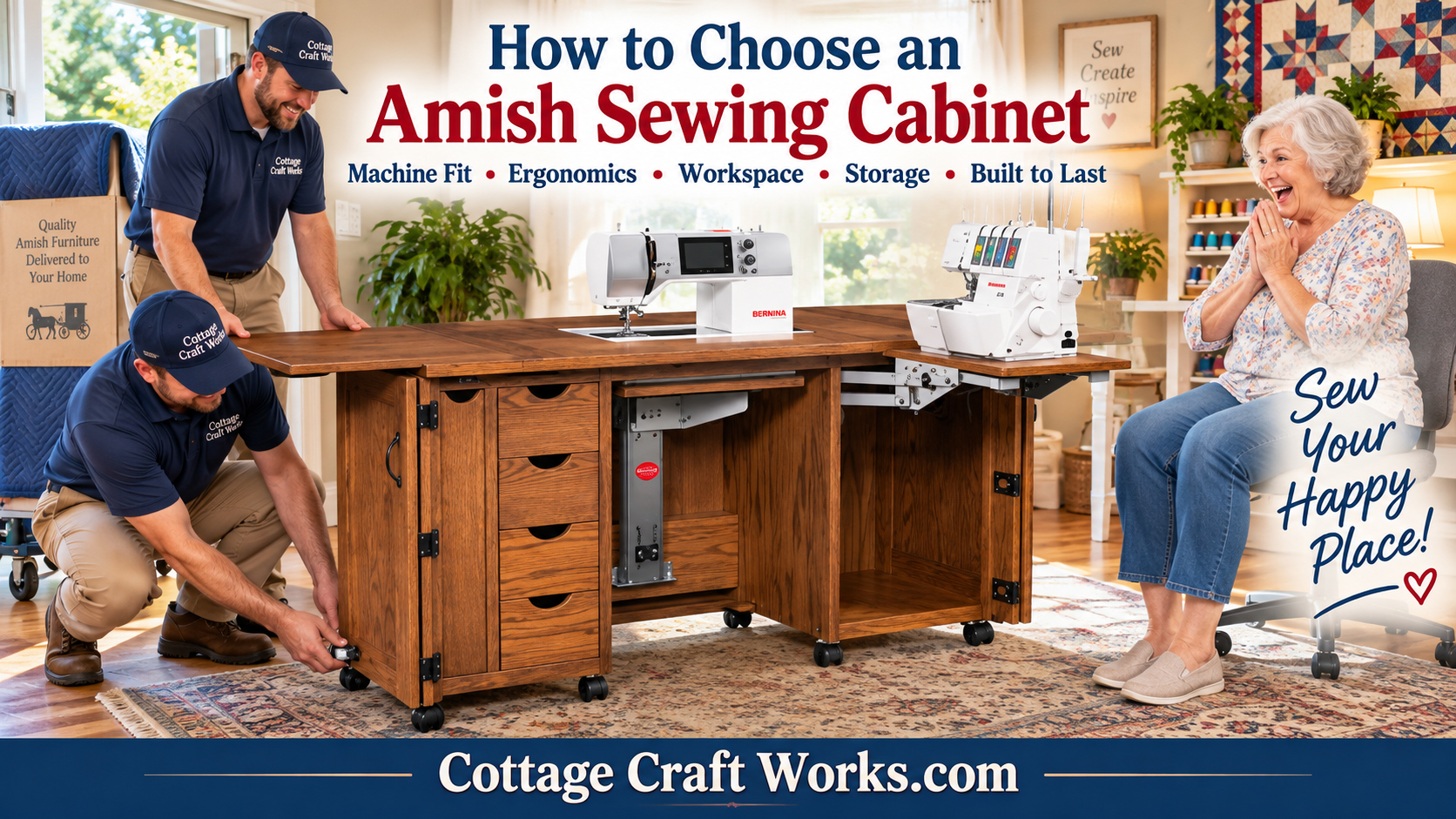
How to Choose an Amish Sewing Cabinet
How do I choose the right Amish sewing cabinet for my sewing machine?
Choose an Amish sewing cabinet by first measuring your sewing machine's width, height, weight, spindle and cord clearance and confirming its exact make and model. Then evaluate sewing-machine lift capacity, kneehole and work-surface dimensions, ergonomics, quilting and embroidery workspace, storage, open and closed cabinet dimensions, casters and the complete delivery path. If you expect to upgrade to a larger quilting or embroidery machine, consider having the cabinet built for the larger future machine and using a custom insert around your current smaller machine.
Start With the Sewing Machine—Not the Cabinet
It is tempting to begin by choosing a cabinet style, hardwood species, stain or door design. Those decisions are important, but they should come later.
The first question should be:
What sewing machine must this cabinet accommodate?
A sewing cabinet is a working piece of furniture. The opening, machine insert, lift, kneehole and surrounding work surface all need to work with the sewing machine.
Measure the machine as it will actually be used and stored, including projections such as the spool spindle and room needed for cords.
Cottage Craft Works recommends confirming the manufacturer and exact model number before the cabinet is built. This is particularly important when a custom machine opening or insert will be produced.
A conventional sewing machine may fit comfortably into a standard cabinet configuration. Larger quilting and embroidery machines can require:
- A wider machine opening
- A wider kneehole
- A larger custom insert
- Additional cabinet clearance
- A taller machine opening
- A heavy-duty or extra-tall lift
Do not assume that because a machine physically fits across the top of a cabinet, it will fit properly inside the cabinet when lowered for storage.
Understand the Two Sewing Machine Lift Positions
One of the major advantages of a dedicated Amish sewing cabinet is the adjustable sewing-machine lift.
The cabinet provides two primary working positions.
Sewing-Bed Height
The machine can be positioned so its sewing bed is approximately level with the surrounding cabinet work surface.
This creates a broad, relatively continuous work area around the machine and provides valuable fabric support when sewing larger projects.
Tabletop Height
The lift can also raise the machine to tabletop height.
This allows the machine to be used much as it would be when placed on an ordinary table and can provide the clearance necessary for adding or using certain machine attachments.
When selecting the cabinet and lift, therefore, consider the machine's width, height, weight and configuration both with and without attachments.
Think About Your Next Sewing Machine, Too
A quality hardwood sewing cabinet can potentially remain in the home much longer than the sewing machine initially installed in it.
That makes future machine size an important consideration.
A traditional standard sewing machine may be approximately 18 inches wide, while newer quilting and embroidery machines can approach 24 inches wide.
If you have an 18-inch machine today but expect eventually to purchase a larger quilting or embroidery machine, building the entire cabinet around the minimum opening required by today's machine can unnecessarily limit tomorrow's choices.
The Custom Plexiglass Insert Makes Planning Ahead Possible
Amish sewing cabinets use a U-shaped Plexiglass insert/template around the sewing machine when it is positioned at sewing-bed height.
The insert is custom-made to fit the particular sewing-machine model and fills the surrounding opening so the machine and cabinet work surface function together.
If you later purchase another machine with a reasonably compatible footprint, a new insert can be ordered for the new machine.
This presents an important opportunity when ordering the original cabinet.
If a larger sewing machine is reasonably foreseeable, the cabinet can be built with sufficient room for that larger machine while the custom insert fills the additional space surrounding your smaller current machine.
That can prevent an otherwise excellent cabinet from becoming obsolete simply because you upgraded your sewing machine.
Choose the Correct Sewing Machine Lift
Machine dimensions are only part of the equation. Machine weight and height are equally important.
The standard sewing-machine lift is intended for machines weighing less than 50 pounds.
Machine height also matters when you want to lower the machine completely into the cabinet and close the cabinet lid. A standard installation accommodates a machine approximately 14-3/4 inches tall for this purpose.
Some newer quilting and embroidery machines are both heavier and taller than traditional machines.
These machines may require a heavy-duty and/or extra-tall sewing-machine lift.
Before ordering, confirm:
Machine make and model + machine width + machine height + machine weight.
This is much safer than choosing a cabinet first and discovering later that the machine cannot be lowered completely into it.
Consider Ergonomics Before Cabinet Height
Sewing can involve hours of relatively stationary work. Poor positioning can contribute to neck, shoulder and lower-back discomfort, particularly during long sewing sessions.
Because Amish sewing cabinets are built to order, ergonomics can be considered when determining the cabinet configuration.
Find Your Comfortable Sewing Height
Sit in the chair you expect to use.
Position yourself as though you were actually sewing, with your arms comfortably extended toward the machine and your hands positioned naturally in relation to the needle.
Consider:
- Tabletop height
- Sewing-bed height
- Elbow and forearm position
- Shoulder position
- Distance from your body to the needle
- Leg and knee clearance
- Foot position
- Visibility of the sewing path
The objective isn't simply to make the cabinet taller or shorter. It is to position the machine, needle, work surface and operator comfortably in relation to one another.
Avoid Twisting to See the Sewing Path
Also pay attention to where you naturally look while sewing.
If the cabinet or machine position requires you to continually rotate your torso or neck to see directly along the sewing path, an otherwise attractive cabinet may become uncomfortable during extended use.
This becomes particularly important for people who spend many hours quilting, embroidering or completing detailed sewing work.
The cabinet should support a natural working position rather than force the operator to adapt continually to the furniture.
Don't Forget Your Feet and Sewing Pedal
Foot position can also affect comfort.
A slanted footrest surface can provide a more comfortable position and help reduce foot fatigue during extended sewing sessions.
The sewing-machine foot pedal may need to be adapted to the arrangement. Depending upon the cabinet and operator, the pedal might be secured to the slanted surface to prevent movement.
Another possibility is mounting or adapting the control near the side of the kneehole for knee operation when appropriate for the equipment and user.
Any pedal modification should preserve safe, predictable machine control and follow the sewing-machine manufacturer's requirements.
The Sewing Chair Is Part of the Workstation
A sewing cabinet should not be selected without considering the chair.
A standard kitchen or dining chair may be acceptable for occasional sewing, but it provides relatively little adjustment for extended work.
A good-quality supportive office-style chair can provide:
- Adjustable seating height
- Better back support
- Improved working posture
- Easier positioning at the needle
- Swivel movement between machines or work areas
The swivel function can be particularly useful when moving between a sewing machine, serger or embroidery machine without repeatedly twisting the body or repositioning a stationary chair.
Treat the cabinet, machine and chair as one sewing workstation.
Measure the Sewing Room Twice: Closed and Open
The dimensions listed for a sewing cabinet do not necessarily tell you how much room it requires while you are sewing.
A standard cabinet might be approximately 48 inches wide when closed, making it appear to fit easily into a particular location.
Once its leaves and work surfaces are opened, however, some cabinets can expand to approximately 80 inches.
That can dramatically change how the room functions.
Before ordering, mark out both configurations:
Closed Cabinet Footprint
Determine where the cabinet will normally sit when it is not being used.
Fully Open Working Footprint
Measure the cabinet with every leaf and work surface you expect to use fully extended.
Then allow room for:
- Your chair
- Walking around the cabinet
- Opening drawers and doors
- Fabric extending beyond the work surface
- Accessing storage
- Moving between sewing stations
- Reaching the back of the machine when necessary
Casters Can Make a Small Sewing Room Work Better
A cabinet that fits neatly against a wall when closed may need to be moved into the room before sewing.
Casters allow the cabinet to be pulled away from a wall or out of a cubby before opening its leaves.
They are particularly useful when the cabinet has a rear fold-up leaf, since the back of the cabinet must be accessible for the leaf to open.
This can make a larger sewing cabinet practical even in a multipurpose room where permanently dedicating the full open footprint to sewing isn't possible.
Measure the Delivery Path Before Ordering
One of the easiest details to overlook is how the finished cabinet will actually reach the sewing room.
An Amish hardwood sewing cabinet is very different from a knock-down cabinet shipped in flat boxes.
Measure:
- Exterior doors
- Interior doors
- Hallways
- Corners
- Stairway width
- Stairway height
- Landings
- Ceiling clearance
- Basement access
- Upstairs access
- Final sewing-room doorway
Pay particular attention to stairs that reach a landing and then turn. This is also something to review if the delivery people will need to make a turn in a hallway to acess the sewing room.
A long embroidery or quilting cabinet may pass through the doorway and down the first section of stairs but still be unable to negotiate the landing or a turn in a hallway.
Sometimes the cabinet must be raised or rotated end-to-end to make a turn. That requires considerably more clearance than the cabinet's simple width measurement suggests.
Measure the complete delivery route before the cabinet is built.
Compare Work Surface—Not Just Cabinet Width
Two cabinets with similar closed dimensions can provide very different sewing experiences.
Consider how much material needs support behind and beside the needle.
This becomes particularly important when quilting. Without adequate support, the weight of a large quilt can pull against the material passing through the machine.
A rear leaf can provide additional support behind the sewing machine and help prevent long or heavy material from hanging directly off the back of the cabinet.
When comparing cabinets, consider:
- Work surface to the left of the needle
- Work surface behind the machine
- Fold-out side leaves
- Rear leaves
- Quilting surface
- Embroidery-machine clearance
- Space for cutting or project organization
Think about the cabinet fully opened for the largest project you realistically expect to make.
Decide What Storage You Will Actually Use
More drawers do not automatically make a cabinet better.
Think about your actual sewing routine.
Consider storage for:
- Thread and spools
- Bobbins
- Needles
- Presser feet
- Scissors
- Rotary cutters
- Patterns
- Rulers
- Fabric
- Machine attachments
- Embroidery supplies
- Serger supplies
Some users may benefit more from additional work surface, while others need substantial organized storage.
If you use a separate serger or embroidery machine, also consider whether you want the cabinet and surrounding room arranged so that you can move easily between machines.
Will the Cabinet Also Be Furniture?
In a dedicated sewing room, leaving the cabinet open may not matter.
In a bedroom, living area, guest room or other shared space, its appearance when closed can be equally important.
A cabinet that completely encloses the sewing machine and supplies can function as a finished piece of furniture when sewing is finished.
Consider both:
How does it work when open?
and
How does it fit the room when closed?
Only after answering the functional questions should you move on to choosing the wood species, stain, hardware and door style.
Understand What the Sewing Cabinet Is Made From
Construction materials are one of the most significant differences between sewing cabinets. You'll be surprised by the differences and the price gap between solid and engineered wood cabinets when you consider everything. You can easily end up paying as much for a cheaper made cabinet as a solid wood custom cabinet built to last.
Amish Hardwood Sewing Cabinet Construction
Cottage Craft Works Amish sewing cabinets use solid hardwood in high-wear areas such as tops, fronts, doors, and drawer fronts, with cabinet-grade veneer plywood used where stable panel construction is appropriate.
This approach combines traditional furniture construction with materials selected for the requirements of larger cabinet panels.
Because the cabinets are built to order, options such as the following should be finalized before construction begins:
- Wood species
- Finish
- Door style
- Cabinet dimensions
- Leaves and work surfaces
- Machine opening modifications
- Lift requirements
- Storage configuration
- Other custom modifications
Solid Hardwood vs. Particle-Board Sewing Cabinets
Construction becomes particularly important when comparing an Amish cabinet with many mass-produced sewing cabinets.
Many store-brand cabinets use laminated particle board and fiberboard components rather than solid hardwood furniture construction.
These materials allow furniture to be produced inexpensively, but they behave differently from hardwood and cabinet-grade plywood.
Laminate Damage
Laminate is a relatively thin surface applied over the underlying engineered board.
Edges can become chipped or damaged. Once damaged, the exposed edge can become unattractive and may create a rough area capable of catching fabric.
Moisture and Humidity
Particle board is particularly vulnerable when water reaches exposed material.
Moisture can cause the wood particles to swell, and the resulting expansion may not return to its original dimensions after drying.
This deserves additional consideration in basement sewing rooms, where humidity, dampness or accidental water exposure may be more likely.
Standing water from plumbing failures can cause especially severe damage when it reaches exposed lower edges.
Sagging Across Long Spans
Long unsupported particle-board panels can deflect under sustained weight.
This can be an important consideration with today's larger quilting cabinets, where work surfaces may span considerable distances.
Fastener Holding
Hinges, drawer slides and other hardware depend upon their fasteners remaining securely anchored.
Repeated loading can damage the surrounding material if screws loosen in particle board, making subsequent repair more difficult.
Drawer Construction
Some mass-produced cabinet drawers use stapled engineered-wood components and thin fiberboard bottoms.
Over time, repeated loading, humidity and weight can contribute to loosening joints or sagging drawer bottoms.
When comparing cabinets, therefore, don't judge construction solely by how the furniture looks in a showroom.
Open the drawers. Examine the underside. Look at the panel edges, hinges, drawer joints, fasteners and materials underneath the decorative surfaces.
A Sewing Cabinet Should Be a Long-Term Purchase
A well-designed sewing cabinet can potentially serve through several generations of sewing machines.
That changes how the buying decision should be approached.
Instead of asking only:
“Will my current machine fit?”
also ask:
“Will this cabinet still work if my next machine is larger, taller and heavier?”
Likewise, don't simply ask whether the cabinet fits the sewing room.
Ask:
“Will it fit my body, my largest projects, my storage needs and the way I expect to sew five or ten years from now?”
Those questions are often more important than choosing between two stain colors.
Amish Sewing Cabinet Ordering Checklist
Before ordering, confirm:
- Sewing machine manufacturer and exact model
- Machine width
- Machine height
- Machine weight
- Spindle and cord clearance
- Current and possible future machine size
- Standard or heavy-duty/extra-tall lift requirements
- Preferred sewing-bed and tabletop working positions
- Comfortable work-surface height
- Kneehole and leg clearance
- Chair and foot-pedal arrangement
- Required quilting and embroidery work surface
- Rear and side leaf requirements
- Storage requirements
- Closed cabinet dimensions
- Fully opened dimensions
- Room for the chair and operator
- Caster requirements
- Doorways, hallways, stairs and delivery clearances
- Wood species, finish, doors and other custom options
Compare your options
Compact or shared-room cabinet
Prioritize a closed-cabinet size that works in the room, a lift that stores the machine below the top, and the few storage features you need every session.
Dedicated quilting or embroidery station
Prioritize larger machine clearance, a custom insert, a rear or side leaf, and a lift that fits the machine’s full height and weight.
Sewing and serger combination
Look for a dedicated serger compartment or adjoining work area so both machines remain accessible without crowding the knee space.
Watch
-
Install Sewing Machine Lift
-
Counter Weight Option Sewing Lift Large Machine
Frequently Asked Questions
What should I measure before ordering an Amish sewing cabinet?
How much does a standard sewing-machine lift hold?
How tall can the sewing machine be and still close inside the cabinet?
Can I change sewing machines later?
Should I order a larger cabinet if I plan to buy an embroidery machine later?
Why is sewing-cabinet height important?
Do I need a rear leaf?
Should I put casters on my sewing cabinet?
Why should I measure my stairs before ordering?
What is the difference between an Amish hardwood cabinet and a particle-board sewing cabinet?
When should custom options be selected?
Related Products
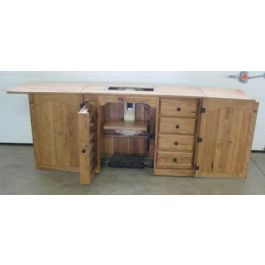 Amish Furniture-Classic Sewing Machine Cabinet View product
 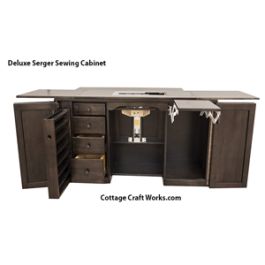 Amish Furniture - Sewing Machine Deluxe Cabinet View product
 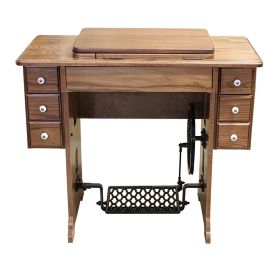 Amish Furniture-Treadle Sewing Machine Cabinet View product
  Sewing Answer Book, The View product
  Compact Sewing Machine Cabinet View product
  Amish Furniture-Singer Reproduction Treadle Sewing Cabinet View product
  Sewing Machine Cabinet | Executive Desk Style | Finished Back View product
 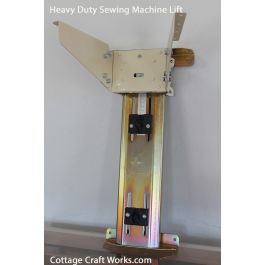 Sewing Machine Air Lift Mechanism | Sewing Cabinet Hardware View product
 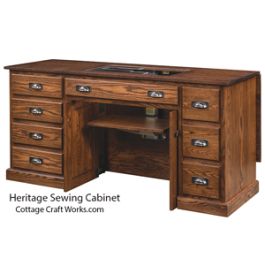 Amish Furniture- Heritage Sewing Cabinet View product
  Sewing Machine-Tool Battery Pack Power Box View product
 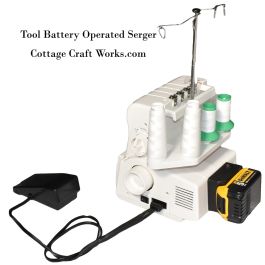 Tool Battery Sewing Serger Machine View product
 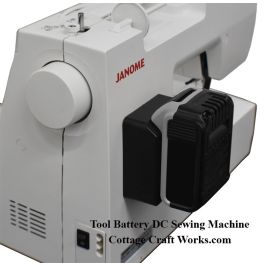 Tool Battery Sewing Machine View product
 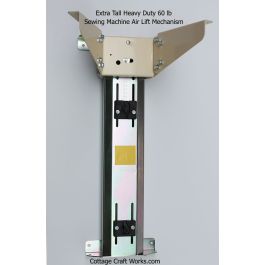 Sewing Machine Air Lift Mechanism Heavy Duty Extra Tall View product
 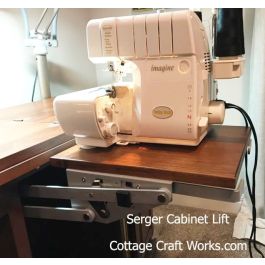 Cabinet Appliance-Sewing Serger Lift View product
 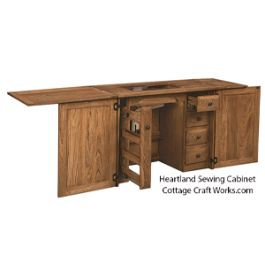 Amish Furniture-Heartland Sewing Cabinet View product
 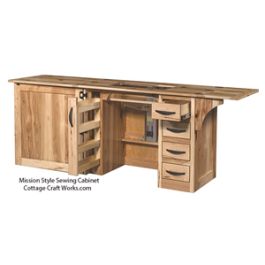 Pioneer Sewing-Serger Cabinet View product
 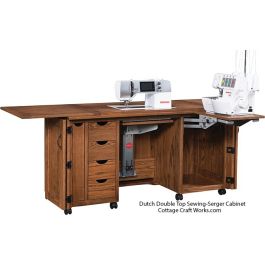 Dutch Double Top Sewing-Serger Sewing Cabinet View product
  Old Mission Double Door Sewing Cabinet View product Standard Double Door Mission Sewing Cabinet View product
 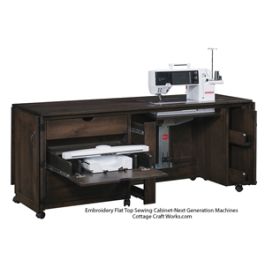 Embroidery Flat Top Sewing Cabinet View product
  European Style Flat Top Sewing Cabinet View product
 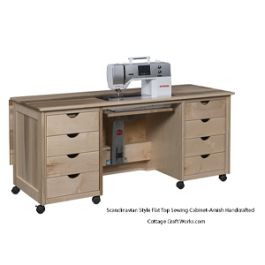 Scandinavian Style Flat Top Sewing Cabinet View product
 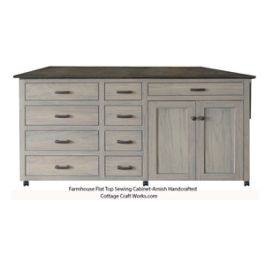 Farmhouse Flat Top Sewing Cabinet View product
 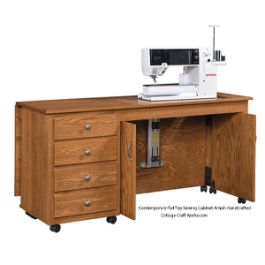 Contemporary Flat Top Sewing Cabinet View product
 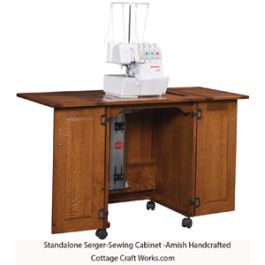 Standalone Serger-Sewing Cabinet View product
 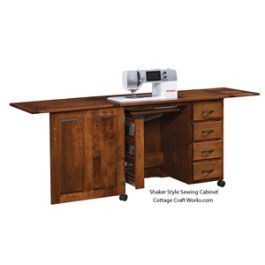 Shaker Style Sewing Cabinet View product
 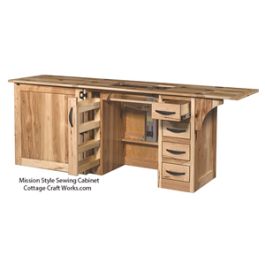 Mission Style Sewing Cabinet View product
 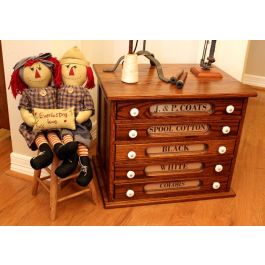 J&P Coats Reproduction Thread Spool Cabinet View product
 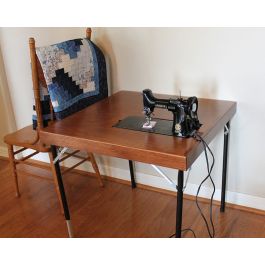 Singer Featherweight Card Table | Reproduction | Singer 221-301 View product
 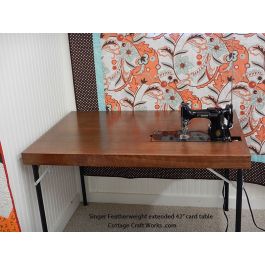 Singer Featherweight Card Table | 42 Inch Extended | 221-301 View product
 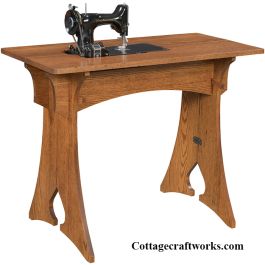 Portable Singer Featherweight Sewing Travel Table View product
  Singer Featherweight Folding Card Table Travel Bag View product