
Parts guide
Diagnose Maytag Wringer Washer Problems Before Ordering Parts
How do I troubleshoot a Maytag wringer washer before buying replacement parts?
Document the exact symptom, make the machine safe, and locate the affected assembly before ordering. Inspect visible wear and use a model-matched manual to distinguish a focused roller, seal, or hardware repair from deeper wringer-head, power-unit, transmission, electrical, or engine work.
Diagnosis saves parts and protects a repairable machine. Start with the exact symptom and the assembly where it appears—not a presumed part number. A roller that will not turn, oil near the wringer, or a leak at the tub can each point to more than one cause. Dripping oily water down the back left corner leg usually indicates that the water has leaked down into the transmission and is pushing out the weep hole from the wringer assembly.
Describe the symptom precisely
Record when it happens, whether the washer is powered, which direction or function is affected, and what you can see or hear. Take photos before cleaning away evidence. For a leak, identify whether it is water at the center/tub area or lubricant near a drive or wringer assembly; do not run the machine to “test” an unsafe or worsening condition.
Inspect the accessible assembly
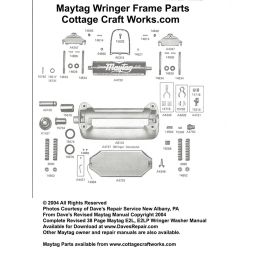
With the machine made safe, inspect obvious wear, loose hardware, damaged rollers, and missing or broken components. Cottage Craft Works troubleshooting material notes that wringer-drive faults can involve the trigger, clutch spring, gears, coupling, or wringer-head components. Those are reasons to use a manual and inspect systematically, not reasons to order all of them at once.
Choose a repair scope
A confirmed roller, gasket, seal, or external hardware failure may be a focused replacement. Multiple worn center-assembly components can justify a complete assembly. Internal power-unit, transmission, wringer-head, electrical, or engine work is a higher-risk repair; use a qualified technician when the manual, tools, or experience are not sufficient.
Compare your options
Visible roller or external hardware damage
Document dimensions and part markings, then verify the matching roller, cap, hanger, or frame component.
Leak near center or tub
Identify water versus lubricant and match seals or gaskets to the tub and model family before ordering.
Wringer will not drive or makes mechanical noise
Stop use and work from the manual; clutch, gear, coupling, and wringer-head components may need systematic inspection.
Internal drive, electrical, or engine issue
Use a qualified technician when the correct procedure, tools, or experience are not available.
Useful links
- Open link
Maytag power unit parts
Reference for power-unit components after a confirmed diagnosis.
- Open link
Maytag troubleshooting reference
Service reference for systematic diagnosis; confirm model and work safely.
- Open link
Shop Maytag wringer washer parts
Browse parts after confirming the assembly and fit.