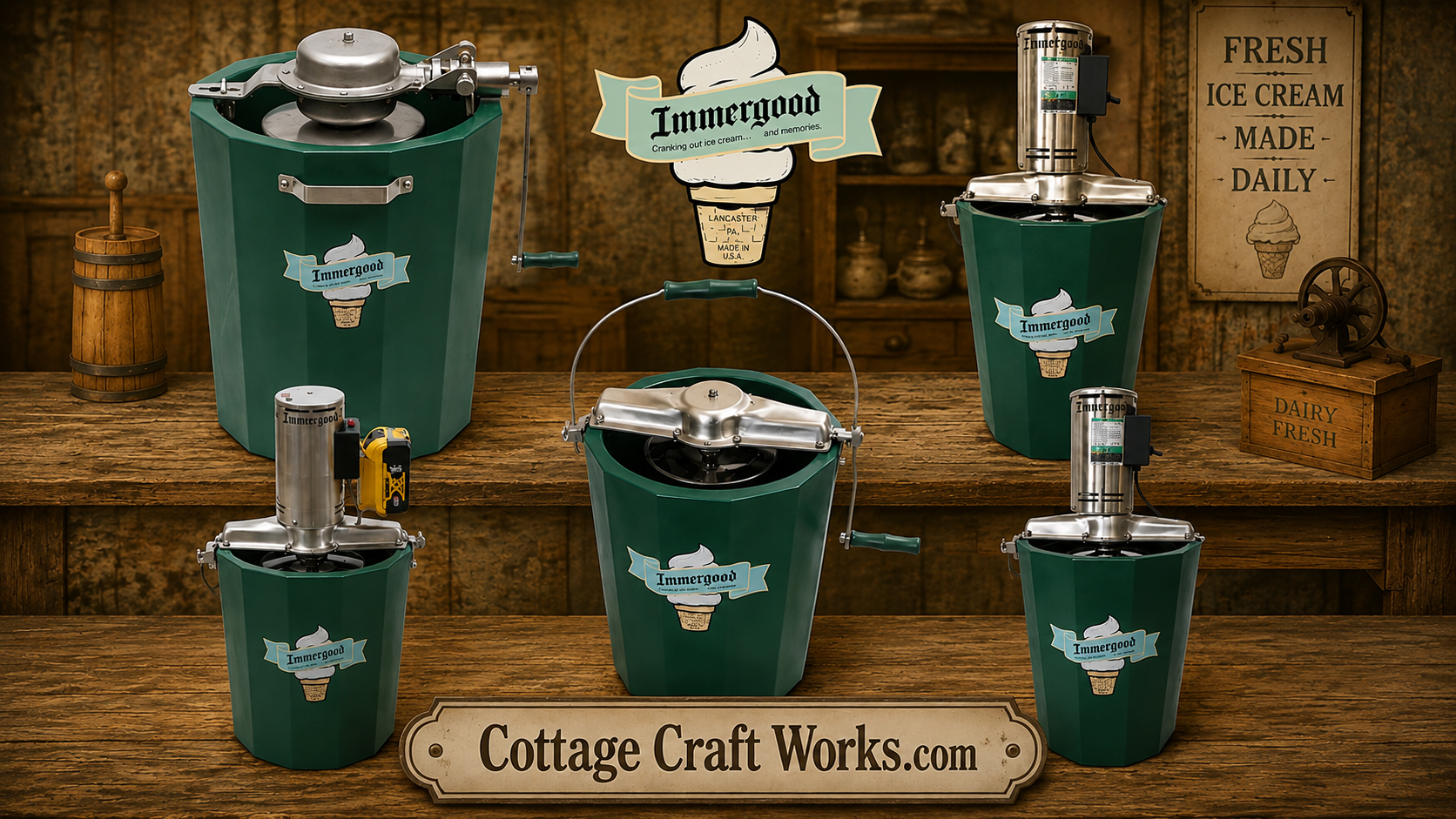

How-to
How to Make Ice Cream with an Immergood Freezer
How do I make ice cream with an Immergood freezer?
Chill the recipe base, assemble the clean can and dasher, surround the can with crushed ice and ice-cream salt, and churn while replenishing the ice and salt as needed. Stop when your recipe and the freezer’s resistance indicate the desired firmness, then ripen if needed and immediately wash and dry the freezer.

This HowTo walks through a reliable first batch on an Immergood ice-and-salt freezer. The packing pattern applies to hand-crank and motorized models; the drive changes, but the cold mix, ice, salt, and cleanup fundamentals do not. Start with your recipe and the owner instructions for the exact model you own—recipes differ in yield and freeze time.
Before you start
Choose a place where salty meltwater is easy to manage. Chill the mix thoroughly, confirm the can, lid, and dasher are clean and dry, and have enough crushed ice and ice-cream salt ready before you assemble the freezer.
Watch the freezer, not only the clock
Churn time varies with the recipe, batch size, ambient temperature, ice size, and salt-brine condition. Keep the ice level around the can as it melts and use the recipe and the changing resistance or sound of your freezer as your guide. Do not overfill the can: frozen mix expands.
What you need
- Chilled ice cream mix and its recipe
- Crushed ice
- Ice-cream or rock salt (not table salt)
- Clean can, dasher, and lid
- Compatible hand crank or correctly mounted motor
- A drain-safe, easy-to-clean area for saltwater brine
- Containers and a freezer if the recipe calls for ripening
Steps
Chill the mix and can
Refrigerate the ice cream base until thoroughly cold. Start with a clean, dry can and chill it if your recipe or owner guidance recommends it; warm mix makes the ice-and-salt system work harder.
Assemble can and dasher
Set the dasher in the can, add the chilled mix only to the recipe or freezer fill level, and lock the lid. Leave headroom because the mix expands as air is worked in and it freezes.
Seat the can in the tub
Place the can in the insulated tub and engage the hand-crank frame or correct motor mount. Before adding ice, make sure the can and dasher turn freely and that the latch is secure.
Pack ice and rock salt
Add crushed ice around the can, sprinkle ice-cream salt over it, and repeat until the can is surrounded nearly to the lid. Replenish ice and salt as they melt so cold brine remains around the can. Keep saltwater away from floors, landscaping, and surfaces it can damage.
Churn until firm
Crank steadily or run the compatible motor while monitoring the recipe, ice level, and freezer resistance or sound. Batch time varies with the recipe, can size, weather, and ice quality, so do not rely on a single universal minute count.
Ripen, serve, and clean
When the batch reaches the recipe’s finish, remove the dasher and ripen in a freezer if you want a firmer scoop. Drain the brine, then promptly wash and completely dry the can, lid, dasher, tub, and drive components.
Watch
-
USA Made Immergood Ice Cream Freezers overview
Downloads
Frequently Asked Questions
Why is my ice cream still soupy after a long churn?
Can I use table salt instead of rock salt?
How long does a typical batch take?
Should I work outdoors?
Related Products
 Stainless 20 Inch Ice Cream Freezer Spoon View product
  Dry Powder Ice Cream Mix View product
  USA Immergood Ice Cream Freezers | 6 Quart Hand Crank View product
  USA Immergood Ice Cream Freezers | Air Motor View product
  USA Immergood Ice cream freezers | 8 Quart Hand Crank View product
  USA IMMERGOOD ICE CREAM FREEZERS | 6 QUART ELECTRIC View product
 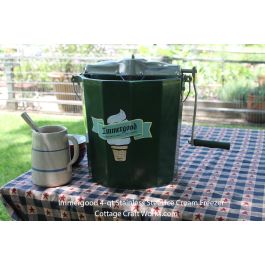 Immergood Stainless 4 Qt Ice Cream Freezer-Maker View product
  Immergood 12-qt Big Boy Ice Cream Freezer View product
  Immergood 6-Qt Battery Powered Ice Cream Freezer View product
 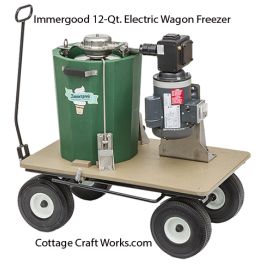 Immergood 12-qt Electric Wagon Mounted Freezer View product
  Immergood 8-qt Battery Powered Ice Cream Freezer View product