


Article
How to Make Herbal Tinctures at Home – Beginner's Guide
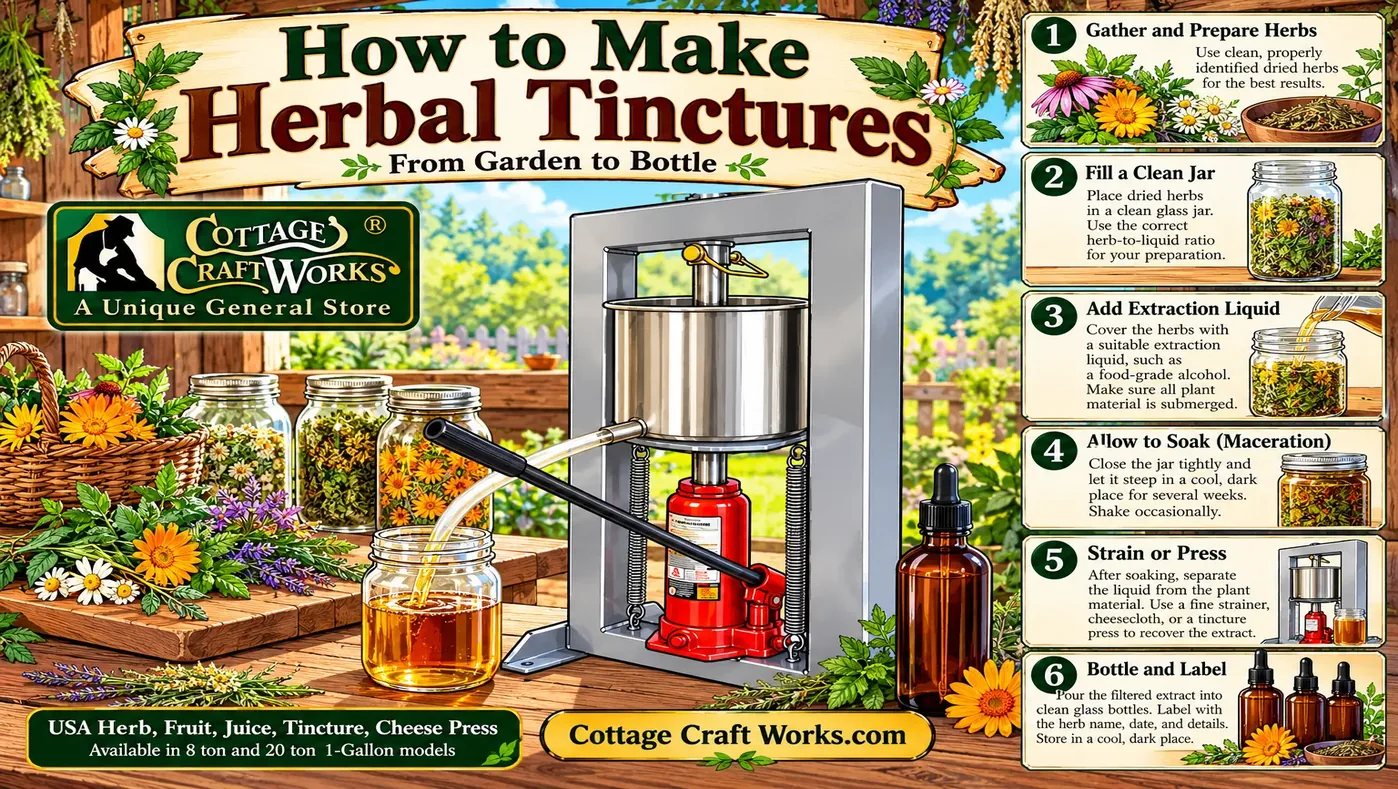
How to Make Herbal Tinctures at Home: A Beginner's Step-by-Step Guide
Learn the traditional process of making homemade herbal tinctures using dried herbs, appropriate extraction liquids, and simple equipment. Discover how to prepare, strain, press, and store botanical extracts while exploring traditional homesteading skills.
What Is an Herbal Tincture?
An herbal tincture is a concentrated liquid botanical extract traditionally made by soaking plant material in alcohol.
During extraction, certain compounds dissolve into the liquid. The plant material is then separated from the extract through straining or pressing.
Making herbal tinctures is a traditional skill that continues to interest gardeners, homesteaders, and people exploring self-sufficient living.
Equipment Needed to Make Herbal Tinctures
You do not need complicated equipment to learn about traditional herbal extraction.
- Clean glass Mason jars with tight-fitting lids
- Properly identified dried herbs
- Suitable food-grade extraction liquid
- Measuring cups or a kitchen scale
- Fine-mesh strainer
- Cheesecloth or suitable filtering material
- Clean glass storage bottles
- Waterproof labels
- Optional stainless steel tincture press
Make Herbal Extraction Easier
A stainless steel tincture press helps recover liquid retained in soaked herbs, reducing the need for hand squeezing.
Shop Tincture PressesHow to Make Herbal Tinctures: Step by Step
Step 1: Choose Your Herbs
Start with correctly identified dried herbs obtained from a reputable supplier.
Different herbs require different extraction methods. Only use botanicals with established safety information.
Step 2: Prepare Your Glass Jar
Select a clean, dry glass jar with a tightly fitting lid.
Make sure the container is large enough for the herbs and extraction liquid.
Step 3: Add Herbs and Extraction Liquid
Place the prepared dried herbs inside the jar. Add the appropriate food-grade extraction liquid according to a reliable, herb-specific formulation.
Alcohol concentration and herb-to-liquid ratios vary by botanical material.
Never use rubbing alcohol, denatured alcohol, or industrial solvents for preparations intended for consumption.
Step 4: Allow the Herbs to Soak
Close the jar securely and store it away from direct sunlight, excessive heat, and open flames.
This traditional soaking process is called maceration.
Some preparations steep for several weeks, although extraction time depends on the herb and formulation.
Step 5: Strain or Press the Herbs
After the appropriate extraction period, separate the liquid from the plant material.
Small batches can be strained through appropriate filtering materials.
For larger batches, a stainless steel tincture press can make the separation process more convenient.
Step 6: Bottle and Label the Extract
Transfer the filtered liquid into clean, compatible glass bottles.
Label each bottle with the botanical name, plant part, preparation date, solvent concentration, herb-to-liquid ratio, and batch information.
Store securely away from children, pets, heat, and direct sunlight.
How to Use a Stainless Steel Tincture Press
A tincture press helps recover liquid remaining inside soaked plant material.
- Place the press on a clean, stable surface.
- Position a suitable collection container below the outlet.
- Prepare the press basket according to its instructions.
- Transfer the soaked herbs into the press.
- Apply pressure slowly and evenly.
- Collect the extracted liquid.
- Filter again if necessary.
- Clean and dry the equipment after use.
Benefits of Using a Tincture Press
- Helps recover additional liquid extract
- Reduces messy hand squeezing
- Useful when processing larger batches
- Reusable equipment for botanical preparation
- Makes separating soaked herbs more convenient
Stainless Steel Tincture Press
Explore traditional herbal processing equipment from Cottage Craft Works.
View Tincture Press EquipmentAlcohol-Based vs. Alcohol-Free Herbal Extracts
Alcohol-Based Tinctures
Alcohol is traditionally used to extract certain botanical compounds and can contribute to preservation when used in an appropriate formulation.
Glycerin-Based Herbal Extracts
Food-grade vegetable glycerin is sometimes used to prepare herbal extracts known as glycerites.
Glycerin has different extraction characteristics than alcohol.
Vinegar-Based Herbal Extracts
Food-grade vinegar is another traditional extraction liquid used in some botanical preparations.
Vinegar extracts differ from alcohol-based tinctures in their chemistry and preservation characteristics.
Frequently Asked Questions About Herbal Tinctures
How long does it take to make a tincture?
Some traditional maceration preparations steep for several weeks. The appropriate time varies depending on the botanical material and extraction method.
Can I make tinctures using fresh herbs?
Some formulations use fresh herbs. However, fresh plant material contains moisture that changes the final solvent concentration.
Do I need a tincture press?
No. Small batches can often be strained using appropriate filtering materials. A press is particularly convenient for larger batches.
What is the difference between a tincture press and a strainer?
A strainer separates free-flowing liquid from solids. A tincture press applies mechanical pressure to help recover liquid retained in the plant material.
Can herbal extracts be made without alcohol?
Yes. Some botanical extracts use glycerin, vinegar, or other suitable solvents, although the extraction properties and storage requirements differ.
How should homemade tinctures be stored?
Store properly labeled preparations in compatible, tightly sealed containers away from children, pets, excessive heat, and direct sunlight.
Are homemade herbal tinctures safe to consume?
Safety depends on the botanical material, preparation method, concentration, and individual circumstances. Some herbs are toxic or interact with medications.
Consult a qualified healthcare professional before using herbal preparations medicinally.
Herbal Preparation and Self-Sufficient Living
Learning traditional herbal preparation methods is one of many skills associated with homesteading and self-sufficient living.
Other traditional skills include growing and drying garden herbs, preserving foods, maintaining reusable equipment, and learning established botanical processing methods.
Cottage Craft Works offers equipment for traditional food preparation, homesteading, and practical self-sufficient living.
```