


Article
Heller-Aller PHB Force Pump Troubleshooting Guide
Why won't my Heller-Aller PHB Force Pump work properly?
Most PHB problems result from air leaks, worn leather components, valve wear, improper packing adjustment, or suction line issues. Systematic troubleshooting usually identifies the cause quickly.
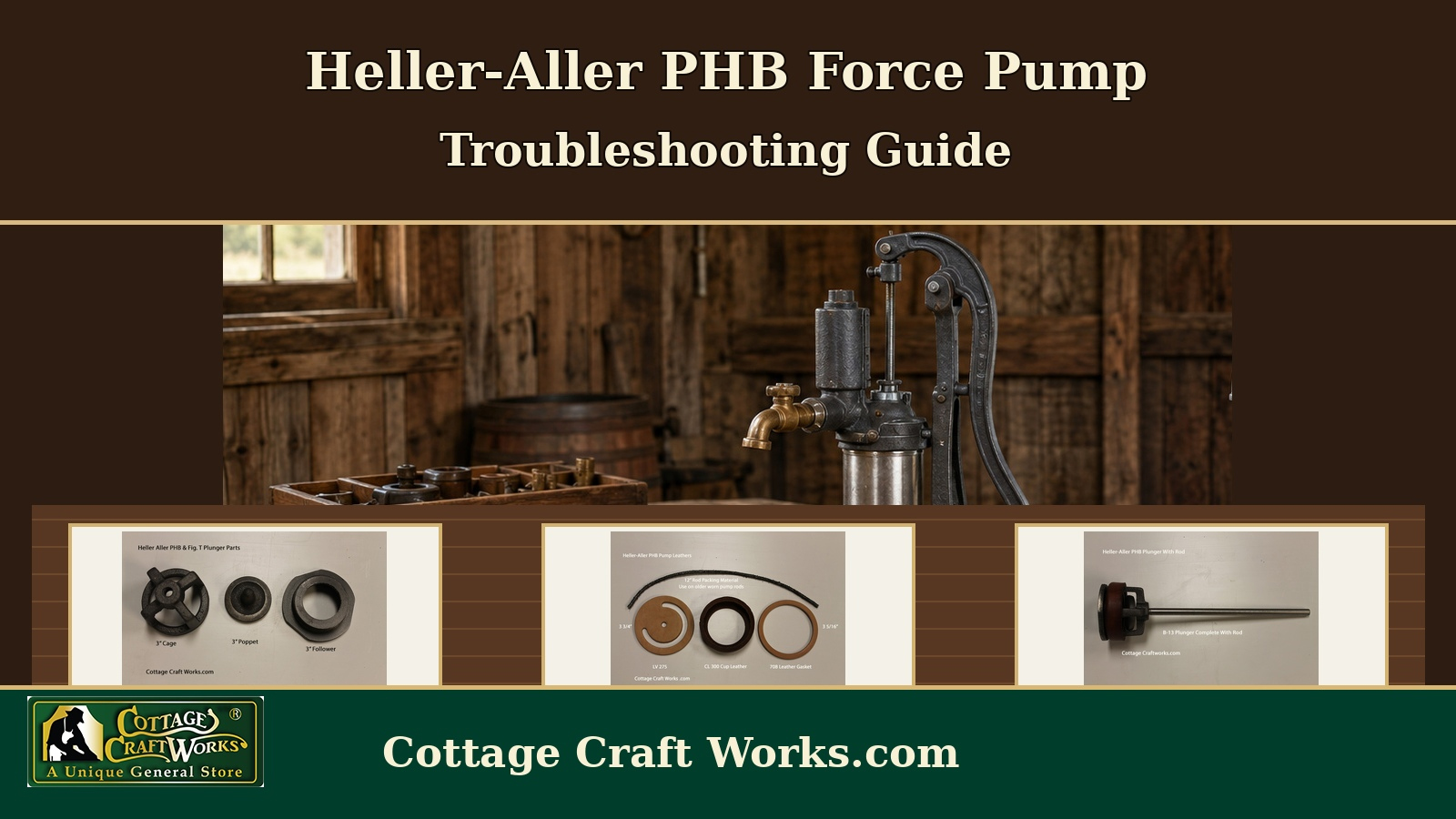
Even the finest hand-operated water pump occasionally requires maintenance or repair. Fortunately, the Heller-Aller PHB Brass Cylinder Force Pump was designed to be serviced, and most operating problems can be diagnosed quickly by observing the pump's symptoms.
This troubleshooting guide begins with the most common problems and walks you through their likely causes, inspection procedures, and recommended repairs. In many cases, replacing a worn leather, tightening a fitting, or cleaning a valve is all that's required to restore dependable operation.
Whenever troubleshooting your pump, remember that many problems share similar symptoms. Taking a few extra minutes to identify the true cause before replacing parts can save both time and expense.
|
Symptom |
Most Likely Cause |
First Thing to Check |
|
Won't prime |
Air leak |
Suction pipe & foot valve |
|
Low water output |
Worn leather |
Leather cup |
|
Leaks around rod |
Packing |
Packing nut adjustment |
|
Hard pumping |
Packing too tight |
Packing adjustment |
|
Loses prime |
Foot valve |
Foot valve operation |
|
Won't build pressure |
Valve leakage |
Valve leather |
|
Water sputters |
Air leak |
Suction fittings |
Pump Will Not Prime
Symptoms
• No water is delivered after repeated pumping.
• Little or no resistance is felt while pumping.
• Pump appears to draw only air.
Possible Causes
• Suction pipe leaking air
• Worn leather cup
• Dry leather cup
• Foot valve not sealing
• Water level below pump capacity
• Loose pipe connections
• Cracked suction pipe
Inspection
Check every threaded connection between the pump and the foot valve.
Verify the pump body has been completely primed.
Inspect the leather cup for dryness or wear.
Confirm that the foot valve is holding water in the suction line.
Recommended Repair
Repair air leaks first.
Replace or condition worn leather components.
Repair or replace a defective foot valve.
Re-prime the pump before testing again.
Pump Loses Prime
Symptoms
• Pump works immediately after priming.
• Water stops after sitting unused.
• Pump must be re-primed frequently.
Possible Causes
• Foot valve leaking
• Air leak in suction pipe
• Loose fittings
• Packing allowing air entry
Inspection
Allow the pump to sit overnight.
If prime is lost, inspect the foot valve and suction line before replacing internal pump parts.
Recommended Repair
Repair suction leaks.
Replace the foot valve if necessary.
Adjust or replace the packing.
Low Water Output
Symptoms
• Water flow has decreased.
• Pump requires more strokes.
• Pressure is weak.
Possible Causes
• Worn leather cup
• Worn valve leather
• Partial obstruction
• Sediment buildup
• Water level lower than normal
Inspection
Inspect leather components first.
Examine the suction pipe for restrictions.
Check seasonal water levels.
Recommended Repair
Replace worn leathers.
Clean the suction line.
Flush debris from the system.
Water Leaks Around Pump Rod
Symptoms
• Water escapes around the rod while pumping.
• Packing remains wet.
Possible Causes
• Loose packing nut
• Worn packing
• Damaged rod
Inspection
Inspect the rod for scratches or corrosion.
Check packing adjustment.
Recommended Repair
Tighten the packing nut slightly.
If leaking continues, replace the packing.
Pump Handle Is Difficult to Operate
Symptoms
• Excessive effort required.
• Jerky movement.
• Handle binds.
Possible Causes
• Packing overtightened
• Dry leather
• Bent rod
• Mineral deposits
• Internal corrosion
Inspection
Loosen the packing slightly.
Inspect the leather cup.
Check rod alignment.
Recommended Repair
Replace dry leather.
Lubricate moving parts.
Correct bent components.
Pump Delivers Air with Water
Symptoms
• Water sputters.
• Air bubbles appear.
• Flow is inconsistent.
Possible Causes
• Air leak
• Water level dropping
• Loose suction fittings
Inspection
Check all pipe joints.
Inspect the suction pipe above the water level.
Recommended Repair
Seal all air leaks.
Verify water level.
Pump Will Not Build Pressure
Symptoms
• Water flows but will not pump uphill.
• Storage tank does not fill.
• Pressure drops immediately.
Possible Causes
• Valve leakage
• Worn leather
• Pressure line leak
• Internal bypass
Inspection
Inspect valves first.
Pressure-test discharge plumbing.
Recommended Repair
Replace worn valve leather.
Repair leaking plumbing.
Water Delivery Is Pulsating
Symptoms
• Uneven flow.
• Surging.
• Pulsing water stream.
Possible Causes
• Air chamber issue
• Valve problem
• Air entering suction line
Inspection
Inspect air chamber.
Inspect valves.
Check suction line.
Recommended Repair
Correct the source of the air leak.
Service the valves if necessary.
Pump Makes Unusual Noise
Symptoms
• Knocking
• Clicking
• Grinding
Possible Causes
• Loose hardware
• Worn linkage
• Bent rod
• Valve damage
Inspection
Operate the handle slowly while listening for the source.
Recommended Repair
Tighten loose hardware.
Replace worn components.
Water Leaks from Pump Body
Symptoms
• Water visible on casting.
• Leaks while pumping.
Possible Causes
• Loose fittings
• Damaged gasket
• Freeze damage
• Cracked casting
Inspection
Dry the pump completely before operating.
Watch for the exact location of the leak.
Recommended Repair
Repair or replace damaged components.
Replace cracked castings if necessary.
Pump Froze During Winter
Symptoms
• Pump suddenly leaks.
• Handle difficult to move.
• Visible cracks.
Inspection
Completely disassemble the pump.
Inspect every casting.
Check valves and brass cylinder.
Recommended Repair
Replace damaged castings.
Never attempt to weld pressure-containing cast iron components.
Leather Cup Wears Prematurely
Symptoms
• Frequent leather replacement.
• Reduced pumping efficiency.
Possible Causes
• Dirty water
• Dry leather
• Rough cylinder
• Sand entering pump
Inspection
Inspect the brass cylinder.
Check for abrasive sediment.
Recommended Repair
Correct the source of contamination.
Install or improve the intake strainer if necessary.
Replace the leather cup.
Pump Operates but Water Volume Is Low
Possible Causes
• Partially clogged suction pipe
• Foot valve obstruction
• Low water level
• Worn valves
• Worn leather cup
Inspection
Work through the system from the water source to the pump.
Never assume the problem is inside the pump until the suction system has been inspected.
Troubleshooting Flow Chart
When diagnosing a PHB pump, use this simple sequence:
- Is there water in the well or cistern?
- Is the pump fully primed?
- Is the foot valve holding water?
- Are there any air leaks?
- Is the leather cup in good condition?
- Are the valves sealing properly?
- Is the packing adjusted correctly?
- Is the discharge plumbing leak-free?
Following this sequence prevents the replacement of good parts while overlooking the actual cause of the problem.
Field Tips from Cottage Craft Works
Many customers assume a pump needs a complete rebuild when it simply has a dried leather cup or a minor air leak. Always begin with the simplest inspections before disassembling the pump.
The suction side of the system is responsible for most pump problems. A tiny air leak at a threaded fitting can prevent the pump from priming, even though no water is visibly leaking.
Never overtighten the packing nut in an attempt to stop a leak. Excessive pressure creates unnecessary friction, accelerates packing wear, and makes the pump harder to operate.
If a pump has been sitting unused for years, inspect and condition the leather components before attempting to operate it. Leather that appears worn may simply be dry and regain its sealing ability after proper conditioning.
Preparing for a Complete Rebuild
If troubleshooting indicates that multiple components are worn or damaged, a complete rebuild is often the most practical solution. Because the PHB was designed with serviceability in mind, rebuilding the pump is straightforward and restores it to dependable operating condition.
In the next section, we'll cover complete disassembly, inspection, leather replacement, valve service, packing replacement, reassembly, and testing procedures to return your Heller-Aller PHB Force Pump to like-new performance.
Disclaimer: This troubleshooting guide is provided for general informational and educational purposes. Pump installations, well conditions, plumbing systems, and individual Heller-Aller PHB pumps may vary. Always shut down and depressurize connected systems before servicing the pump, follow applicable plumbing and well regulations, and consult a qualified professional when necessary. Cottage Craft Works assumes no responsibility for damage, injury, water contamination, or system failure resulting from improper installation, diagnosis, repair, or use.
Useful links
- Open link
PHB Pump Parts