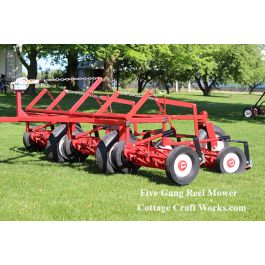

Article
How to Use an ATV, UTV or Tractor Gang Reel Mower
How fast should I pull a gang reel mower?
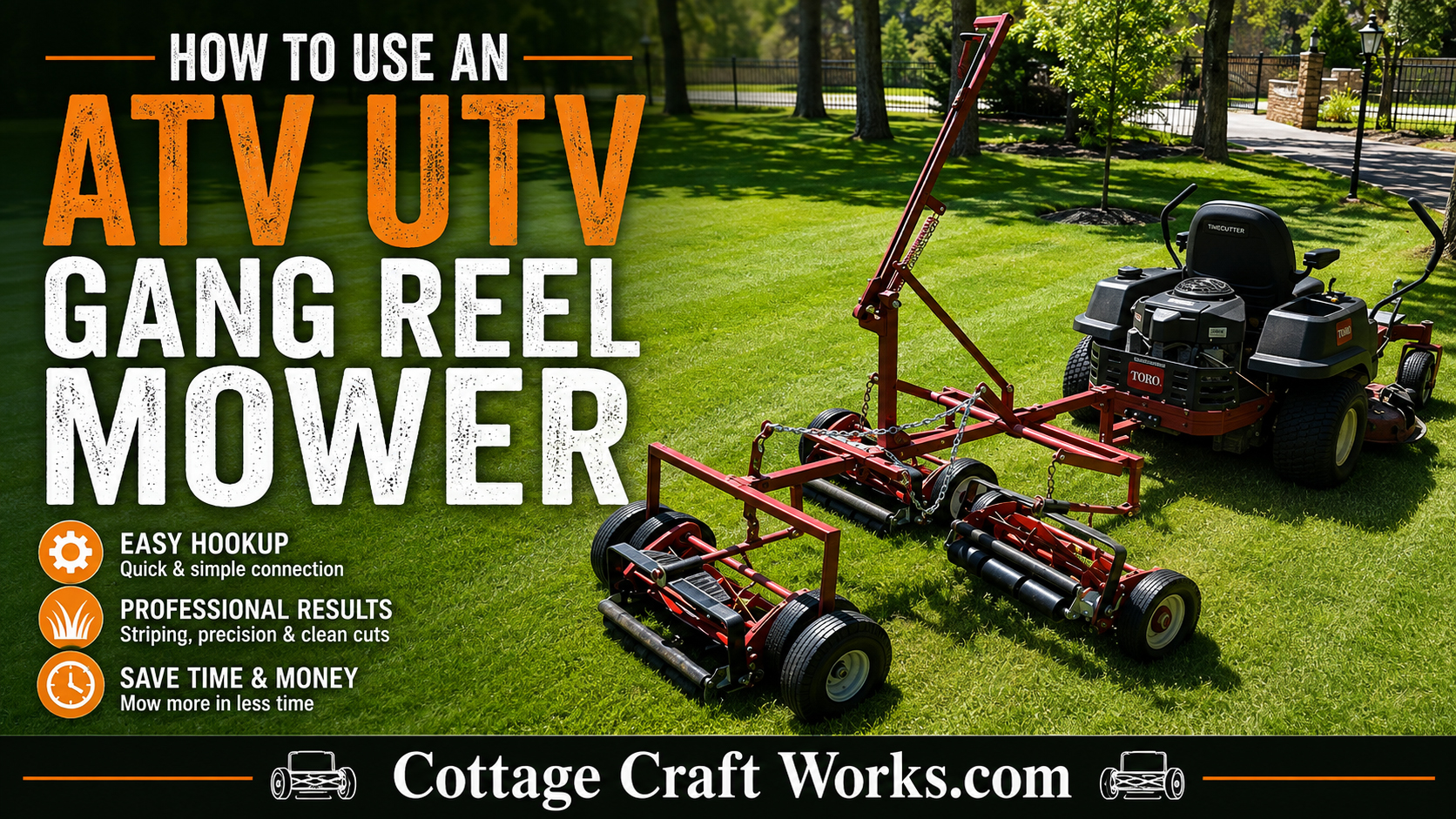
Gang reel mowing is straightforward, but achieving good results depends on preparing the lawn, using an appropriate tow vehicle, maintaining a reasonable speed, avoiding debris, and understanding how multiple floating reel heads track the turf.
Inspect Before Mowing
Before each use, inspect:
Reels and bed knives.
Wheels and rollers.
Hitch connections. )Keep them lubricated)
Lift mechanisms where equipped.
Check air pressure on lever lift frames if equipped.
Loose hardware.
Visible damage.
Walk the Lawn
Remove sticks, rocks, wire, toys, heavy branches, and other debris.
With a 58- or 92-inch cutting path, you are covering considerable ground and may not see every object from the tow vehicle.
Avoid mowing when grass is wet or has a heavy dew. A reel mower depends on the reel blade and bedknife's bare metal edges to remain sharp; when they are allowed to get wet, they will rust at the points of contact.
Connect the Tow Vehicle
Use the specified hitch arrangement and confirm the connection is secure before moving.
What Kind and Size is Recommended for a Tow Vehicle?
Generally, a lawn and garden tractor, UTV, ATV, or even some golf carts that produce at least 12 hp are sufficient. Larger tractors may pull the gang mowers too fast or at too high a power setting, which can damage the reels if they hit a solid object.
Lower the Reels on the Lawn
If equipped with a lever or winch lift, transport the mower with the heads raised and lower them once positioned on suitable turf.
Use an Appropriate Speed
Current Cottage Craft Works lift-frame and five-gang mower information recommends a speed of approximately 2.5–4 mph.
Plan Your Turns
Wide gang equipment requires more room than a hand mower.
Slow before turns and avoid abrupt maneuvers. That will create additional side force on the reel wheels.
Avoid Tall Grass or Weedy Patches
Reel mowers are only finish mowers designed to cut and maintain grass turf under 3". They should not be used as a field or brush mower.
Overlap Your Passes
A small amount of planned overlap can help avoid narrow strips of uncut grass.
Keep an eye on the reels. It is difficult to turn around and check your reels while towing a reel mower gang, but it is important to know when a reel has ingested a stick or twig and has locked up, only dragging it along. Look for any strips of uncut grass on the next lap. If available, a rear-view mirror may come in handy.
Raise for Transport or Remove Trailing Reels
Don't drag operating reels across gravel, pavement, sticks, or rough surfaces when using a lift-equipped system or individual trailed mower heads.
Clean the Mower Heads When Finished
Use a leaf blower and a bristle brush to remove grass clippings and debris. Avoid washing, which may cause rust to develop on the reel edges and bedknife.
Store in a Clean, Dry Shed or Garage
Do not allow the mower heads to be exposed to the elements; mow when conditions are dry and store them in a dry area. If the heads do become wet, immediately blow them dry with a leaf blower and coat the blades and bedkife with a spray lubricant.
Disclaimer
This information is provided for general educational purposes. Always follow the mower manufacturer's instructions and observe appropriate safety practices for equipment, blades, towing, and operation.