
Article
How to Build and Use a Burn Barrel From a 55-Gallon Drum
How do you build a burn barrel from a 55-gallon drum, and what accessories improve its safety and maintenance?
A traditional burn barrel uses a suitable 55-gallon steel drum with a top opening and lower ventilation, while an elevated bottom grate, fitted ember-control lid, and ash-cleanout door can improve airflow and maintenance where outdoor burning is legally permitted.
Introduction: The Traditional Backyard Burn Barrel
For generations, burn barrels were familiar on rural farms and homesteads without convenient trash collection. A basic barrel is a steel drum with an open top and lower ventilation holes to encourage an upward draft. This inexpensive arrangement has limitations: embers can escape, ash builds up, and poor airflow leaves partially burned material behind. Modern accessories can help with maintenance and contain larger embers, but they don't eliminate smoke hazards or override local law.
Are Burn Barrels Legal? Check Before You Build
Before purchasing a drum or installing a kit, consult your local fire marshal, county and municipal authorities, state environmental agency, and HOA. Burn barrels may be prohibited, restricted to certain materials, require permits, or be temporarily banned during high fire danger. A burn barrel is not automatically a recreational fire pit, and calling it one does not create a legal loophole. A screen or grate does not legalize otherwise prohibited burning. Texas outdoor-burning exceptions are limited and subject to additional local restrictions. See the TCEQ Outdoor Burning in Texas guide: https://www.tceq.texas.gov/downloads/publications/rg/outdoor-burning-in-texas-rg-49.pdf
How to Build a Basic Burn Barrel From a 55-Gallon Drum
Step 1 — Select a suitable steel drum. Used 55-gallon drums may be available from farms, industrial suppliers, or drum reconditioners. Choose a clean, structurally sound drum with a verified history. Never use a drum that contained hazardous chemicals, flammable liquids, pesticides, solvents, or unknown substances; dangerous residues and vapors can remain even when it appears empty. Avoid drums with unknown coatings or serious rust.
Step 2 — Prepare the opening. A removable-top drum is easier to use. If a closed-head drum needs modification, have a qualified drum-reconditioning or metalworking professional do it: cutting or heating a used drum can cause an explosion. Finish sharp edges safely.
Step 3 — Provide airflow. Basic designs have ventilation holes near the lower portion. An elevated bottom grate and dedicated draft/ash door offer a more serviceable alternative, admitting air beneath the material and allowing ash removal. Follow the hardware maker’s installation instructions.
Step 4 — Add an ember-control grate. A fitted steel grate with welded handles and finished edges can reduce the escape of larger burning material. It cannot guarantee containment of all sparks. Verify local mesh-opening requirements.
Step 5 — Choose a safe location. Use a stable noncombustible surface, comply with setback requirements, and stay clear of buildings, dry vegetation, branches, fences, and combustible storage. Keep extinguishing equipment nearby, supervise continuously, and avoid windy or high-fire-risk conditions.
Pros and Cons of Owning a Burn Barrel
Potential advantages: For remote properties without regular collection, a burn barrel may offer an additional legal option for certain suitable materials. Historically, it has also been used for paperwork and clean, untreated wood where allowed; when available, secure shredding and appropriate recycling or disposal are preferable.
Disadvantages: Escaping embers can cause fires and liability. Hot metal can injure children, visitors, or animals. Smoke can affect health and neighbors. Ash and partially burned paper accumulate; wet residues block draft openings and accelerate corrosion. Owners may otherwise need to tip over a heavy drum to clean it.
Why Traditional Burn Barrels Are Difficult to Clean
Catalogs and stacks of paper can char around the edges while leaving material in the center. Ash and debris collect at the bottom; rain turns them into heavy sludge that blocks airflow. Moisture and corrosive combustion residues accelerate rust. Without a cleanout opening, owners may have to turn the drum over. An elevated bottom grate and ash door allow access beneath the burning material after it is completely extinguished and cooled.
A Better Burn Barrel Design From Cottage Craft Works
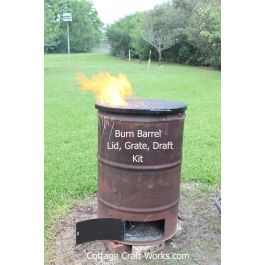
Cottage Craft Works offers a hardware system designed to address three problems: escaping embers, poor draft, and difficult ash removal. It combines a heavy-duty top grate, an elevated bottom grate, and a draft/ash-cleanout door. The system makes cleaning more practical but does not eliminate hazardous emissions, sparks, or the need for legal compliance and supervision.
1. Heavy-Duty Burn Barrel Top Grate Lid
Product: https://cottagecraftworks.com/burn-barrel-top-grate-lid
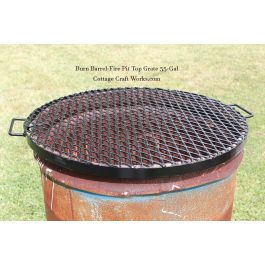
The USA Amish-made grate is designed for a standard 55-gallon steel drum. Published specifications include an approximate 24-inch outside diameter, a 23-3/4-inch inside diameter, 1/2-inch mesh openings, welded side handles, a hanging hook, finished edges, and a high-temperature stove-paint finish. The hook lets you hang the cooled grate alongside the barrel during loading or servicing. Local codes may require finer mesh than 1/2 inch. If so, you can wire or bolt another layer of mesh to the underside of the grate, inside the rim, to reduce exposed rough edges. The grate is also sold separately for suitable permitted fire-pit applications, or warming stations for winter outdoor activities and construction sites.
2. Elevated Bottom Grate for Better Draft
Product: https://cottagecraftworks.com/burn-barrel-bottom-grate-draft-and-ash-door-kit
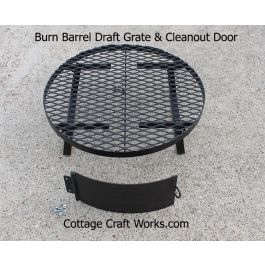
The bottom grate is approximately 21-5/8 inches in diameter and sits about 6 inches above the barrel floor. This provides a space for air circulation and ash collection, reducing the need to move the entire barrel during routine cleanout.
3. Draft Door and Ash Cleanout
The lower draft/ash door assembly is approximately 12 × 6 inches, with an approximately 10 × 5-inch opening and magnetic latch. It allows draft below the grate and access for removing accumulated ash after the barrel has cooled completely. Prepare the opening and secure the door according to manufacturer instructions.
4. Optional Chain for Bottom-Grate Removal
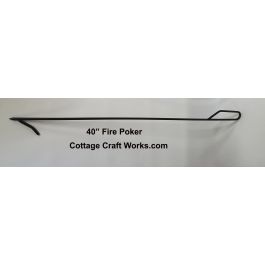
Cottage Craft Works describes using a 53” length of heavy chain secured through the bottom grate mesh with a quick link or suitable bolt. Then hang the other end from a “J” hook bolted on the side near the top. This can help lift the cooled grate for thorough cleaning. You can also hook the chain at the top with a long-handled tool to stir up papers for a more complete burn; Do not reach into or stand over an active fire, even a smoldering one. Remove or clean the grate only after the fire is extinguished and everything is cool.
Complete 55-Gallon Burn Barrel Hardware Kit
Product: https://cottagecraftworks.com/burn-barrel-grate-hardware-kit
The complete kit includes the top grate lid, elevated bottom grate, and draft/ash-cleanout door. The 55-gallon steel drum is not included. It offers better maintenance access than a basic barrel with only ventilation holes, while requiring the same precautions as any outdoor burning device.
How to Use a Burn Barrel More Safely
Before each use, confirm the intended materials and activity are legal; check current burn bans, weather, and wind; inspect for rust, damage, and blocked draft; verify all hardware is fitted; clear combustibles; keep children and pets away; and have extinguishing equipment ready. Never leave a fire unattended. Avoid plastics, rubber, treated or coated lumber, chemicals, aerosol cans, electronics, batteries, and mixed household garbage. Never use gasoline, diesel, or other flammable liquids to start a fire. Fully extinguish the fire before leaving. Coals and ash can remain hot long after flames disappear.
Important: Smoke From Paint and Coatings
New drums will likely contain paints and internal coatings that can produce some hazardous fumes when heated for the first few burns. Wind direction becomes even more important; stay as far away as possible upwind. Avoid exposing neighbors or animals to smoke.
Keeping Rainwater Out of Your Burn Barrel
Rainwater mixes with ash to form wet, corrosive residue. Cottage Craft Works suggests a universal-style lid of the kind used on 55-gallon deer feeders for storage. Some lids are plastic: never put one on until the barrel is fully extinguished and completely cool. A storage lid generally will not fit over the top grate, which should be removed and stored separately when cool.
Burn Barrel Maintenance and Ash Removal
After complete extinguishment and cooling, open the cleanout door; remove ash and debris; inspect the grate, lower draft area, barrel bottom, and hardware; and replace damaged parts. Keep rain out during storage. Ash from waste burning can contain contaminants; do not spread it on gardens or compost. Follow local disposal requirements and avoid breathing ash dust.
Final Thoughts
The traditional 55-gallon burn barrel is simple, but open tops, poor airflow, ash buildup, and corrosion are major drawbacks. Where burning is legal, the Cottage Craft Works top grate, elevated bottom grate, and ash door can improve handling and maintenance. These accessories cannot guarantee fire containment or prevent toxic emissions.
Safety Disclaimer
Educational information only. Outdoor burning can cause fire, injury, property damage, and harmful air pollution. Verify state, county, city, fire-district, and HOA restrictions. Hardware does not guarantee fire containment or authorize prohibited burning.
Buyer assumes all risk; neither Cottage Craft Works LLC nor the manufacturer assumes any liability for the outcomes of using this grate kit. No guarantees, either written, taken, or implied, are provided that the grate kit will prevent all embers from escaping or any personal injuries that may occur during the use and handling of the grate kit parts.