
Article
Cleaning, Sanitation & Facility Requirements for Tincture Production
What cleaning, sanitation and facility requirements apply when making herbal tinctures?
Personal tincture making can often be performed safely in a clean home environment using properly cleaned and sanitized equipment.
Commercial production is different. Producers manufacturing botanical tinctures for sale must determine how their finished products are regulated and comply with applicable federal, state and local requirements.
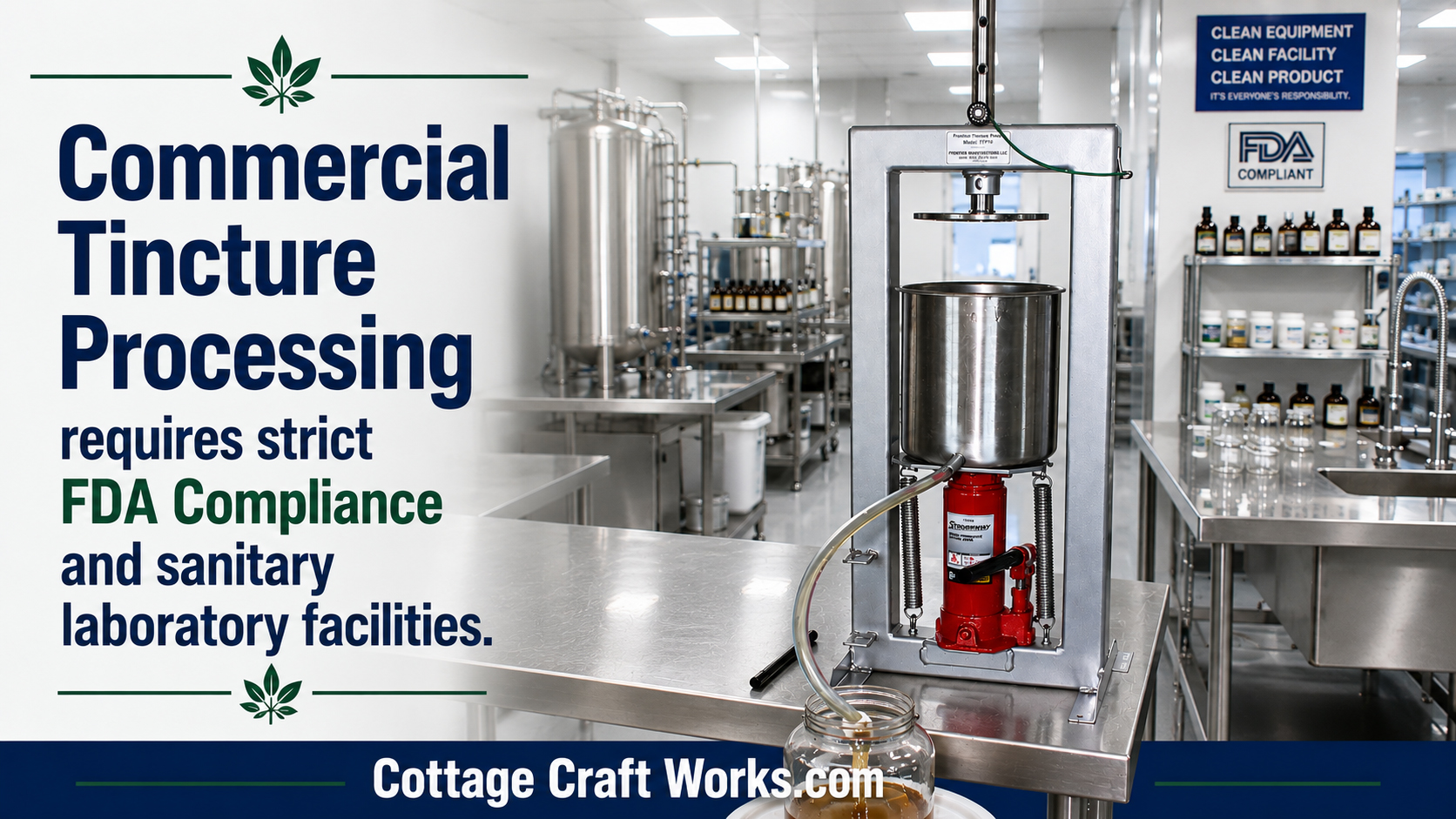
For products regulated as dietary supplements, FDA Current Good Manufacturing Practice requirements under 21 CFR Part 111 address personnel, physical plants, sanitation, equipment, production controls, packaging and recordkeeping.
Special attention should be given to every product-contact surface, including a frequently overlooked component: the flexible drain hose used to transfer extract from a tincture press.
Why Sanitation Matters in Tincture Production
Making a botanical extract involves more than soaking herbs in an extraction liquid and pressing the resulting material.
From maceration through bottling, the extract may contact:
- Maceration containers
- Mixing utensils
- Press baskets
- Pressing plates
- Collection vessels
- Screens
- Filter bags
- Funnels
- Pumps
- Valves
- Fittings
- Drain hoses
- Filter housings
- Bottling equipment
- Bottle-filling nozzles
- Caps and closures
Every product-contact surface creates another opportunity for contamination, residue buildup or cross-contact between batches.
A good sanitation program therefore considers the entire product path, not simply the visible surfaces of the tincture press.
Personal Tincture Making vs. Commercial Production
Personal and Home Use
Someone preparing botanical extracts solely for personal use can generally work in a clean home kitchen or similarly clean workspace.
Basic practices should include:
- Starting with clean equipment.
- Washing hands before handling botanicals and equipment.
- Keeping pets away from the processing area.
- Keeping raw food and unrelated kitchen activities separated from tincture preparation.
- Cleaning work surfaces before beginning.
- Using clean containers and utensils.
- Cleaning equipment promptly after use.
- Allowing equipment to dry thoroughly before storage.
- Keeping cleaning chemicals away from ingredients and finished extracts.
These practices are sensible sanitation measures for personal preparation, but they should not be confused with a commercial CGMP program.
Commercial Tincture Production
Once botanical preparations are manufactured, packaged, labeled or held for commercial distribution, producers need to determine the regulatory classification of their products.
For tinctures marketed as dietary supplements, manufacturers should become familiar with:
FDA Current Good Manufacturing Practice in Manufacturing, Packaging, Labeling, or Holding Operations for Dietary Supplements — 21 CFR Part 111.
These requirements extend well beyond simply having a clean room.
They address areas including:
- Personnel hygiene
- Physical plant cleanliness
- Water
- Plumbing
- Pest control
- Equipment and utensils
- Product-contact surfaces
- Manufacturing controls
- Quality control
- Packaging and labeling
- Batch records
- Written procedures
- Recordkeeping
A commercial tincture facility therefore does not necessarily need to resemble a pharmaceutical research laboratory. It does, however, need to provide an environment appropriate for the product being manufactured and capable of preventing contamination.
What Should a Commercial Tincture Processing Area Look Like?
The processing area should be designed to be maintained in a clean and sanitary condition.
Practical considerations include:
Cleanable Surfaces
Work tables, floors, and other processing surfaces should be constructed to be effectively cleaned and maintained.
Stainless-steel work surfaces are commonly useful around extraction, filtration and bottling equipment because they are durable and readily cleaned.
Adequate Space
There should be enough room around the tincture press, filtration equipment and bottling equipment to permit cleaning and prevent contamination or batch mix-ups.
Raw botanical materials, work-in-process extracts, packaging materials and finished products should be organized and appropriately separated.
Water
A facility needs an adequate supply of safe and sanitary water for its intended uses.
When water can come into contact with ingredients, dietary supplements, or product-contact surfaces in a way that could make it part of the product, FDA requirements become particularly important.
Hand-Washing Facilities
Commercial facilities should provide suitable hand-washing facilities so employees can maintain appropriate hygiene before handling exposed ingredients, extracts, or product-contact equipment.
Plumbing and Drainage
Plumbing must be properly designed and maintained to prevent wastewater from becoming a source of contamination.
Pest Control
The facility should be protected against insects, rodents and other pests.
Lighting and Ventilation
Processing areas should have adequate lighting for cleaning, equipment inspection, and production activities.
Ventilation should not introduce contamination into exposed botanical extracts.
Cleaning the Tincture Press
The press should be cleaned after processing a batch and before residue has an opportunity to dry onto product-contact surfaces.
Pay particular attention to:
- Press basket
- Pressing plate
- Collection pan
- Screens
- Basket perforations
- Seams
- Corners
- Valves
- Fittings
- Drain outlet
Remove botanical solids before washing.
Equipment should then be cleaned using a method appropriate for the materials from which it is constructed.
For commercial production, the manufacturer should establish written cleaning and sanitation procedures specifying what is cleaned, how it is cleaned, what cleaning or sanitizing products are used where appropriate, who performs the procedure, and how cleaning is documented.
The Often-Overlooked Component: The Poly Drain Hose
The drain hose deserves its own sanitation procedure.
Liquid flowing from the press can coat the entire interior surface of the hose. Unlike a stainless-steel pan or basket, the inside of a flexible hose cannot be easily inspected.
Residual extract can remain in:
- Low spots
- Bends
- Connections
- Barbed fittings
- Valves
- Hose ends
That makes the drain system an important product-contact area.
After Each Production Session
The hose should be completely drained and cleaned as part of the product-contact system.
A practical procedure should include:
- Drain the remaining extract completely.
- Disconnect the hose where practical.
- Flush the interior to remove visible botanical material and extract residue.
- Clean the hose using a cleaning procedure compatible with the hose material and the product being processed.
- Rinse as required by the cleaning-agent instructions and facility procedure.
- Sanitize when required by the established sanitation procedure.
- Drain the hose completely.
- Allow it to dry in a manner that protects it from recontamination.
- Inspect accessible ends and fittings before the next batch.
Simply running a small amount of water through a hose and putting it away should not be considered a complete commercial sanitation procedure.
Alcohol Does Not Eliminate the Need for Cleaning
A common misconception is that an alcohol-based tincture automatically sanitizes everything it touches.
Alcohol content may inhibit some microbial growth, but it does not remove:
- Botanical particles
- Oils
- Resins
- Waxes
- Proteins
- Mineral deposits
- Previous-product residue
- Foreign material
Physical cleaning remains necessary.
Sanitation and cleaning should therefore be treated as separate but related operations.
Cleaning removes residue and soils.
Sanitizing reduces microorganisms to an appropriate level when sanitation is required.
A surface should generally be properly cleaned before a sanitizer is expected to work effectively.
When Should a Poly Drain Hose Be Replaced?
Flexible tubing should be considered a wear item rather than a permanent component.
Replace product-contact tubing when inspection reveals conditions that make effective cleaning questionable, including:
- Cracking
- Splitting
- Discoloration that cannot be removed
- Persistent odors
- Cloudiness that prevents useful inspection
- Hardened tubing
- Sticky or degraded interior surfaces
- Deep scratches
- Damaged fittings
- Residue that cannot be effectively removed
Commercial operators may also establish a scheduled replacement interval as part of their sanitation program.
The appropriate interval depends on the tubing material, extraction media, production frequency, cleaning chemistry, and the manufacturer's recommendations.
Avoid Cross-Contamination Between Botanicals
Residue from one botanical should not unintentionally contaminate the next batch.
This is particularly important when producing multiple single-herb tinctures.
For example, after processing one botanical, residue may remain in the:
- Basket
- Pressing cloth
- Filter
- Collection pan
- Valve
- Drain hose
- Pump
- Filling equipment
The equipment should be cleaned sufficiently before another botanical is processed.
Commercial manufacturers should establish procedures appropriate to their products for preventing contamination and mix-ups between batches.
Cleaning Filtration Equipment
Filters are another potential source of retained botanical material.
Reusable Filter Equipment
Reusable housings, screens, and other product-contact components should be disassembled as necessary, so trapped material can be removed.
Pay attention to:
- Screen edges
- Gaskets
- Threads
- Valve cavities
- Filter housings
- Hose connections
- Seals
Disposable Filter Media
Filter paper, cartridges, or other single-use media should not be reused merely to reduce production costs.
Follow the filter manufacturer's intended-use instructions.
Cleaning Bottling Equipment
The sanitation process continues after filtration.
Before filling tincture bottles, inspect and clean applicable product-contact components such as:
- Reservoirs
- Filling tanks
- Hoses
- Pumps
- Filling heads
- Nozzles
- Valves
- Funnels
Filling and packaging operations should protect the finished extract from contamination.
For dietary supplements, FDA CGMP requirements specifically address cleaning and sanitizing filling and packaging equipment and the use of sanitary handling procedures.
See the attached PDF
How To Clean And Sanitize Clear PVC Tubing Used In Tincture Pressing
Establish a Cleaning SOP
Commercial producers should consider each piece of equipment in a written Standard Operating Procedure.
A useful cleaning record can identify:
Equipment: Tincture Press
Equipment ID: __________
Product/Batch: __________
Date Used: __________
Cleaning Date: __________
Cleaning Method: __________
Cleaning Agent: __________
Sanitizer, if applicable: __________
Drain Hose Inspected: Yes / No
Equipment Released for Use: Yes / No
Employee Initials: __________
Quality Review: __________
The goal is not merely to say that equipment was cleaned.
The producer should be able to demonstrate that an established cleaning procedure was followed.
Where Commercial Producers Can Find the Federal Requirements
The principal federal starting point for manufacturers producing tinctures marketed as dietary supplements is:
U.S. Food and Drug Administration — 21 CFR Part 111, Current Good Manufacturing Practice in Manufacturing, Packaging, Labeling, or Holding Operations for Dietary Supplements.
FDA also publishes a Small Entity Compliance Guide that explains the dietary supplement CGMP requirements in more accessible language.
Commercial producers should also investigate FDA Food Facility Registration requirements. Facilities that manufacture, process, pack, or hold food—including dietary supplements—generally must register with FDA unless an exemption applies.
Federal requirements are only part of the picture.
A producer should also determine applicable:
- State requirements
- Local health requirements
- Building requirements
- Fire requirements
- Wastewater requirements
- Business licensing
- Product labeling requirements
The exact obligations depend upon the product, claims, operation, and location.
Important Regulatory Distinction
Calling every botanical liquid a "tincture" does not determine how FDA regulates it.
Intended use and marketing claims matter.
A botanical preparation sold as a dietary supplement may be regulated as a dietary supplement.
A botanical preparation promoted as treating, preventing, or curing a disease may instead qualify as a drug and be subject to substantially different requirements.
Commercial producers should therefore determine the regulatory status of their products before relying upon any general tincture-production guide.
Disclaimer
This information is provided for educational purposes only and is not medical, legal, or regulatory advice. Regulations and requirements may change and vary by product, location, and intended use. Commercial producers are responsible for determining and complying with all current federal, state, and local requirements applicable to their products and operations.
Downloads
Frequently Asked Questions
Can I make tinctures in my home kitchen?
Commercial production is different and requires evaluation of the applicable federal, state and local requirements.
Does a commercial tincture business need a laboratory?
Dietary-supplement manufacturers should review FDA's 21 CFR Part 111 CGMP requirements concerning physical plants, equipment, sanitation, production and quality control.
Do I need to clean the tincture press after every batch?
Why is the drain hose especially important?
Does the alcohol in a tincture sanitize the drain hose?
Is there a specific tube cleaning protochol that should be used?
How should a poly drain hose be stored after cleaning?
When should tincture tubing be replaced?
Do filters need to be cleaned between tincture batches?
Where can I find the federal rules for commercial dietary-supplement production?
Commercial producers should also investigate FDA food-facility registration requirements and applicable state and local regulations.
Does Cottage Craft Works determine whether my facility complies with FDA requirements?
There are three particularly useful official federal resource links below.
These are general federal-level compliance standards to begin the searches needed for compliance and are not meant to be all-inclusive. Individuals considering processing commercial tincture products should also research city, county, and state requirements for business licenses, registration, and what is regulated or prohibited to produce in those jurisdictions, including ingredients and potency of the tinctures.
The FDA Dietary Supplement CGMP Small Entity Compliance Guide: The FDA explains that Part 111 requires written procedures for cleaning the physical plant and for pest control, and for maintaining, cleaning, and sanitizing equipment, utensils, and other product-contact surfaces. It also specifically addresses sanitation during manufacturing and filling/packaging.
FDA Dietary Supplement Guidance & Regulatory Information is a broader regulatory portal. This gives a commercial producer access to CGMP, labeling and claims, new dietary ingredient requirements, adverse event reporting, and other dietary supplement guidance.
FDA Food Facility Registration. FDA states that facilities engaged in manufacturing, processing, packing, or holding food generally must register, subject to exemptions, and FDA guidance expressly treats dietary supplements and dietary-supplement components as “food” for facility-registration purposes.