
Article
How the Heller-Aller PHB Force Pump Works, Pump Components & Installation Planning
How does a Heller-Aller PHB Brass Cylinder Force Pump work?
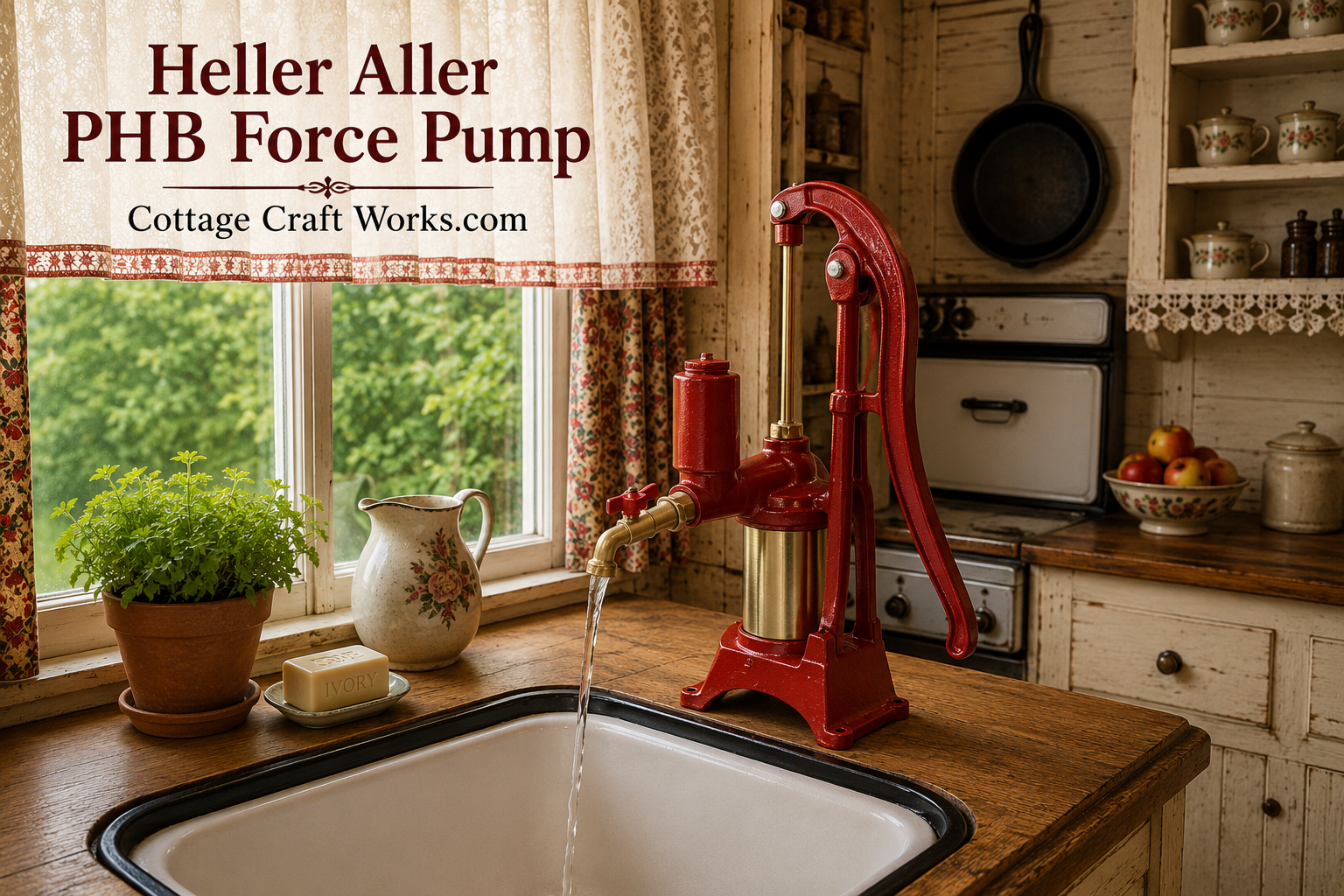
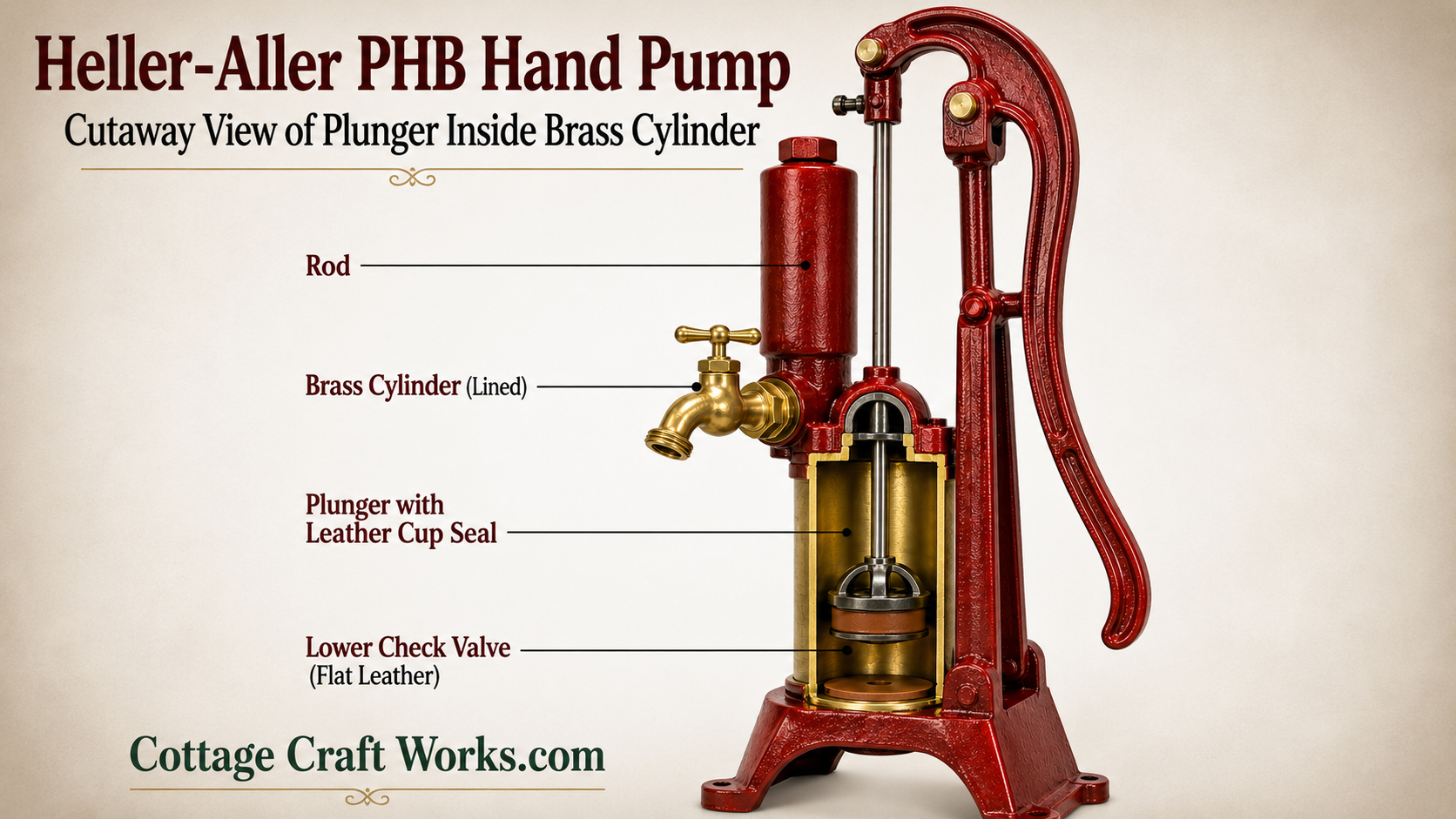
The Heller-Aller PHB Brass Cylinder Force Pump is a hand-operated pump that uses the movement of the handle to operate the internal pump rod, piston, leathers, and check valves inside the brass cylinder. As the handle is worked, the piston creates suction that draws water up from the cistern or shallow well, then forces that water upward through the pump body and out through the discharge spout.
Introduction
Before installing or rebuilding a Heller-Aller PHB Force Pump, it's important to understand how the pump operates and why it differs from a traditional pitcher pump. Although its appearance resembles many antique hand pumps, the PHB is actually a double-acting force pump capable of both lifting water and delivering it under pressure.
Understanding the major components, pumping cycle, and installation requirements will help ensure years of dependable operation while making future maintenance and troubleshooting much easier.
How the PHB Force Pump Works
The PHB is a manually operated double-acting force pump designed to draw water from a shallow well or cistern up to 20' deep and deliver it under pressure through a discharge pipe or plumbing system.
Unlike a standard pitcher pump that discharges water through an open spout, the PHB pumps water into a sealed pressure chamber. As the handle is operated, water is forced through internal check valves and compressed inside the pump body. This pressure allows water to be delivered to:
• Indoor sinks
• Elevated storage tanks
• Livestock watering systems
• Garden hose connections
• Remote plumbing fixtures
Because water is pumped on both the upward and downward movement of the handle, the PHB delivers a smoother, more consistent flow while requiring less effort than many single-acting pumps.
Disclaimer: This troubleshooting guide is provided for general informational and educational purposes. Pump installations, well conditions, plumbing systems, and individual Heller-Aller PHB pumps may vary. Always shut down and depressurize connected systems before servicing the pump, follow applicable plumbing and well regulations, and consult a qualified professional when necessary. Cottage Craft Works assumes no responsibility for damage, injury, water contamination, or system failure resulting from improper installation, diagnosis, repair, or use.
The Pumping Cycle
Each stroke of the handle performs two functions simultaneously.
Upstroke
As the handle is raised:
• The plunger moves upward.
• Water is drawn into the brass cylinder.
• The lower valve opens.
• The upper valve closes.
Freshwater begins to fill the pumping chamber.
Downstroke
As the handle is lowered:
• The plunger forces water upward.
• The lower valve closes.
• The upper valve opens.
• Water enters the pressure chamber.
• Water exits through the discharge connection.
This alternating valve action produces continuous water flow while minimizing wasted movement.
Major Pump Components
Although the PHB contains relatively few moving parts, each serves an important purpose.
Handle
Provides the leverage needed to operate the pump.
The long handle reduces operator effort while allowing comfortable pumping over extended periods.
Pump Head
Contains:
• Handle pivot
• Plunger rod
• Packing nut
• Upper valve assembly
The head supports the operating mechanism and seals the upper portion of the pump.
Packing Nut
The packing nut seals around the pump rod.
Its purpose is to:
• Prevent water leaks
• Prevent air leaks
• Allow smooth rod movement
Packing should be snug enough to prevent leakage but not so tight that pumping becomes difficult.
Plunger Rod
The stainless-steel or brass plunger rod transmits motion from the handle to the brass cylinder.
Because it moves with every stroke, it should remain:
• Straight
• Smooth
• Free of corrosion
Leather Cup
One of the most important items of wear.
The leather cup creates the seal between the plunger and brass cylinder.
A properly conditioned leather cup:
• Creates strong suction
• Pumps efficiently
• Lasts for years
Dry or damaged leather is one of the most common causes of poor pump performance. If freezing is not a concern, keeping the cylinder full of water is the best way to store it seasonally so the leather does not wear out.
Brass Cylinder
The seamless brass cylinder is one of the defining features of the PHB.
Advantages include:
• Extremely smooth surface
• Reduced leather wear
• Excellent corrosion resistance
• Long service life
Unlike cast iron cylinders, brass provides a smoother pumping action and significantly extends the life of the leather.
Check Valves
The PHB uses internal check valves to control water flow.
Their job is simple:
Allow water to move in only one direction.
If either valve leaks, the pump may:
• Lose prime
• Produce low pressure
• Deliver less water
• Require excessive pumping
Air Chamber
The built-in air chamber stores compressed air during operation.
This compressed air:
• Cushions the pumping action
• Smooths water delivery
• Reduces pulsation
• Helps maintain pressure
Without an adequate air cushion, water delivery becomes uneven.
Discharge Connection
Unlike a traditional pitcher pump, the PHB uses a threaded outlet at the top of the drain spout for connecting plumbing.
This allows the pump to supply:
• Water lines
• Holding tanks
• Pressure piping
• Remote fixtures
Why the Brass Cylinder Matters
The brass cylinder is one of the biggest reasons Heller-Aller pumps have earned such an excellent reputation.
Benefits include:
• Minimal corrosion
• Extremely smooth operation
• Longer leather life
• Reduced friction
• Easier pumping
• Improved efficiency
Because leather operates against polished brass rather than rough cast iron, normal wear is greatly reduced.
Understanding Suction Lift
Every shallow-well hand pump is limited by atmospheric pressure.
Although many people assume pumps "pull" water upward, the pump actually creates a vacuum while atmospheric pressure pushes the water into the pump.
For this reason, practical suction lift is generally limited to approximately:
20 feet
As lift increases:
• Pumping becomes more difficult.
• Water delivery decreases.
• Priming becomes more critical.
If your static water level exceeds approximately 20 feet, a deep-well pump with a working cylinder should be considered instead.
Is the PHB Right for Your Application?
The PHB performs exceptionally well when:
✓ Water level is within approximately 20 feet.
✓ Water is supplied from a cistern.
✓ Pressure is needed to reach another location.
✓ No electricity is available.
✓ A dependable emergency water supply is desired.
The PHB may not be the best choice when:
✗ Static water exceeds approximately 20 feet.
✗ Very high water volume is required.
✗ Continuous commercial pumping is expected.
In these situations, another Heller-Aller model may be more appropriate.
Planning Your Installation
Before ordering or installing a pump, answer the following questions:
What is my static water level?
Measure from ground level to the standing water level.
Will the pump sit directly over the well?
Or will it draw from a nearby cistern?
Do I need pressure?
Will you be pumping to:
• A sink?
• A storage tank?
• A barn?
• A livestock watering station?
What pipe size should I use?
Proper pipe sizing affects:
• Pump efficiency
• Priming
• Water volume
• Pumping effort
Pipe recommendations will be covered in Part 3.
Will the pump remain outdoors year-round?
If so, freeze protection should be considered before installation.
Preparing for Installation
Before beginning installation, inspect every component.
Verify:
✓ Pump casting
✓ Handle movement
✓ Brass cylinder
✓ Leather cup
✓ Valves
✓ Hardware
✓ Pipe threads
✓ Mounting flange
✓ Packing adjustment
Correcting minor issues before installation prevents much larger problems later.
Disclaimer: This troubleshooting guide is provided for general informational and educational purposes. Pump installations, well conditions, plumbing systems, and individual Heller-Aller PHB pumps may vary. Always shut down and depressurize connected systems before servicing the pump, follow applicable plumbing and well regulations, and consult a qualified professional when necessary. Cottage Craft Works assumes no responsibility for damage, injury, water contamination, or system failure resulting from improper installation, diagnosis, repair, or use.
Photos
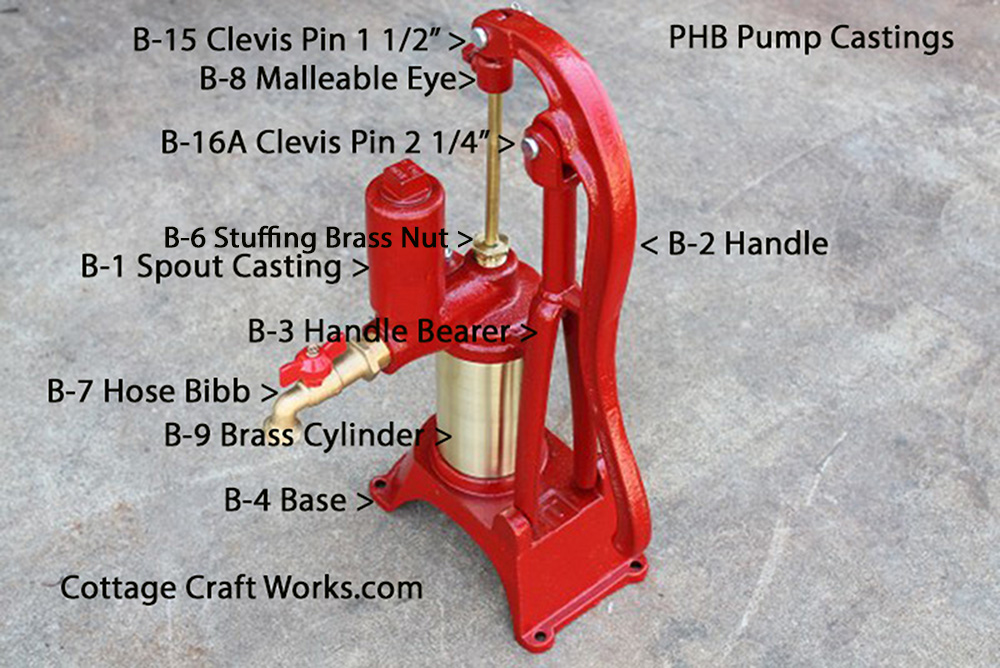
PHB Parts ID 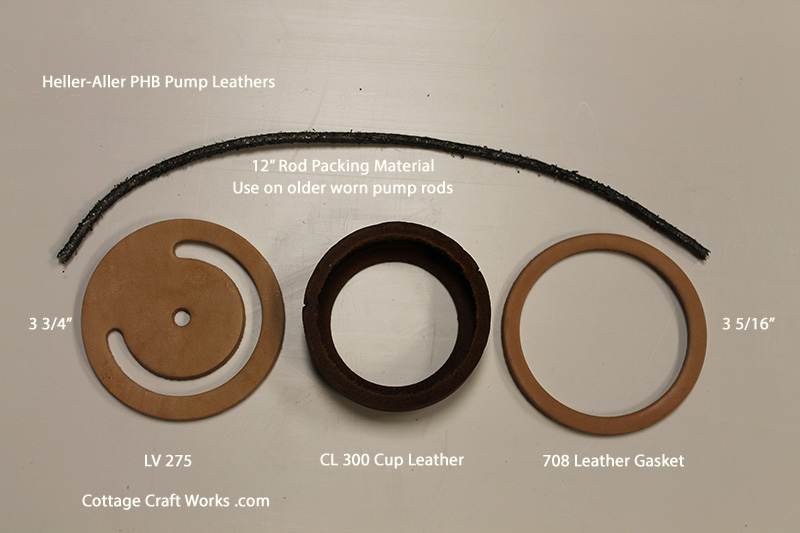
PHB Leather Kit 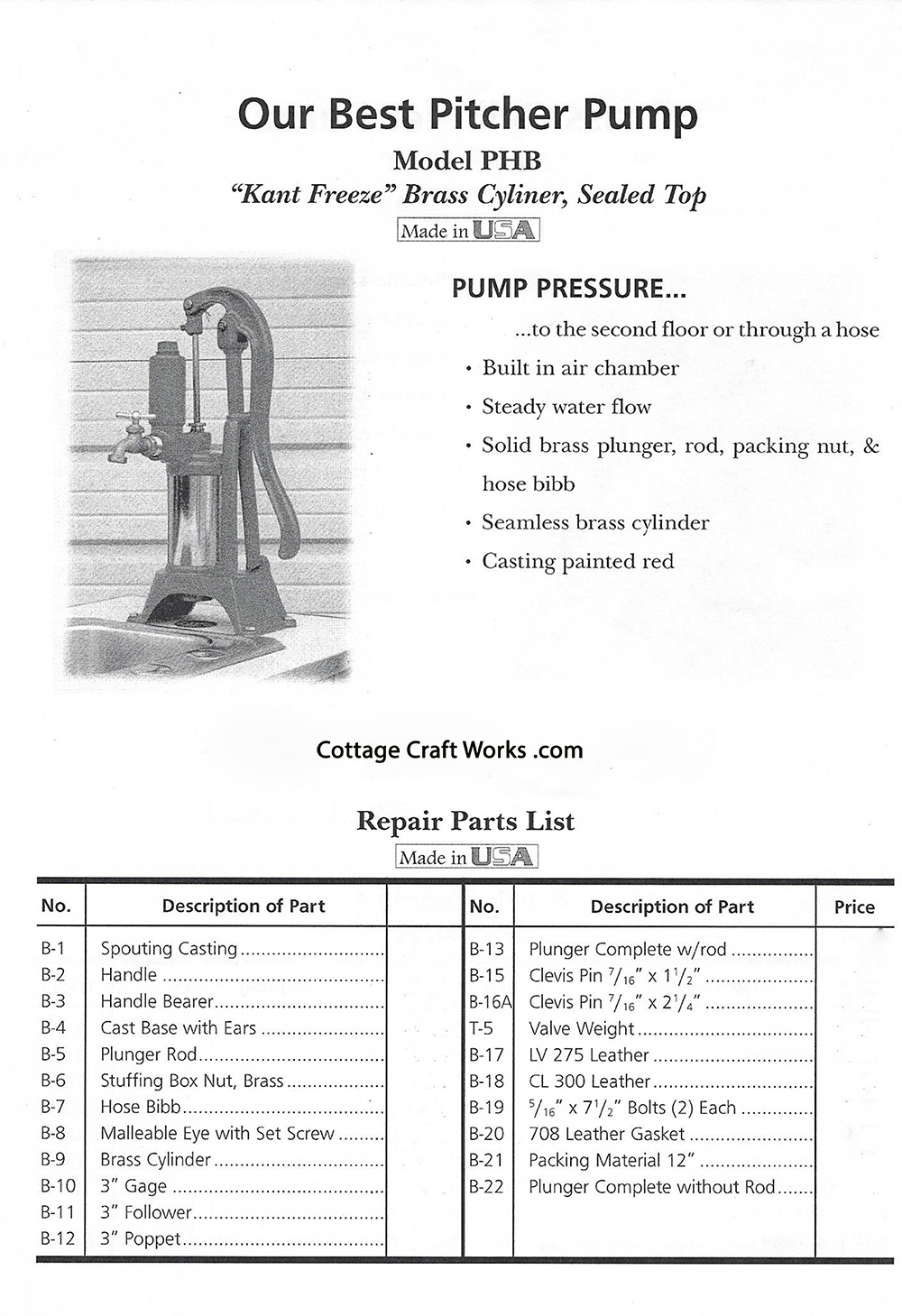
PHB Parts Sheet
Downloads
- Download
The Original PHB Owners Manual