


Article
Meet the Heller-Aller Fig. T Brass Cylinder Cistern Pump
What is a Heller-Aller Fig. T Brass Cylinder Cistern Pump?
The Heller-Aller Fig. T is a hand-operated brass-cylinder water pump designed primarily for cisterns and shallow-well applications. It uses a mechanical plunger and check-valve system to lift water without electricity and is designed with replaceable service parts so the pump can be maintained and rebuilt.
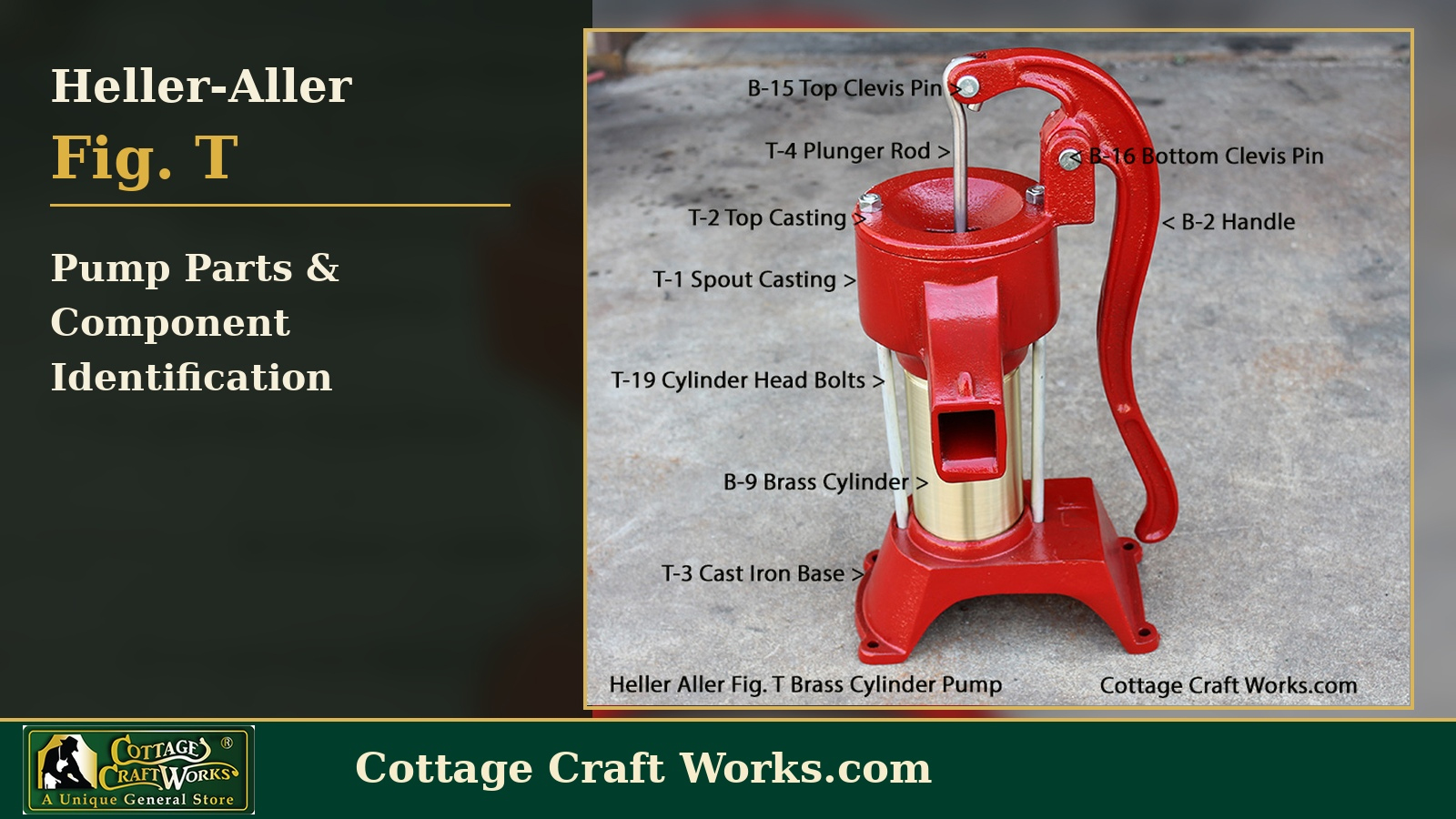
The Heller-Aller Fig. T Brass Cylinder Pump represents a traditional style of hand-operated water pump, reflecting Heller-Aller’s long history of American water-pumping equipment. Designed primarily for cisterns and shallow wells, the Fig. T uses a brass cylinder and simple mechanical pumping action to draw water by hand. Its durable construction, serviceable components, and straightforward design have enabled this type of pump to remain useful on farms, in rural homes, in cabins, and in off-grid water systems.
The history of the Heller-Aller Fig. T Brass Cylinder Pump is closely connected to the development of dependable hand-operated water systems for American farms and rural homes. Heller-Aller traces its pump-making heritage to 1886, an era when access to a reliable hand pump was an essential part of everyday life.
Before electric well pumps became common, water for drinking, cooking, washing, livestock, and other household and farm uses often had to be pumped manually. Cisterns and shallow wells were important sources of water, particularly in rural areas where a convenient pressurized water system was unavailable.
The Fig. T was developed around a straightforward principle: provide a durable hand-operated cistern and shallow-well pump that could move water without requiring electricity.
One of the distinguishing characteristics of Fig. T is its brass-cylinder construction. Brass was well suited for water-pump components because of its corrosion resistance and its ability to provide a smooth working surface for internal pumping components. Combined with replaceable leather and mechanical parts, the design created a pump that could be maintained and rebuilt rather than discarded when normal wear occurred.
Operating the handle moves the internal pumping mechanism through repeated strokes. The movement of the plunger and check valve controls the direction of water through the pump. With each pumping cycle, water is progressively lifted from the source and discharged through the pump spout.
This simple mechanical design made the Fig. T particularly useful in rural applications. The pump did not require an electric motor, complicated controls, or an outside power source. When components eventually wore out, many repairs could be performed by replacing individual service parts.
That serviceability is one reason traditional Heller-Aller hand pumps have remained relevant long after electric pumping systems became commonplace. A properly installed hand pump can still provide a practical water source for cabins, farms, off-grid properties, and backup water systems.
The Fig. T is designed primarily for cistern and shallow-well applications, rather than as a deep-well pump. Like other suction-type hand pumps, its practical lifting capability is limited by atmospheric pressure and actual installation conditions. For substantially deeper water levels, a pump designed with the working cylinder located down in the well is normally required.
Understanding this distinction is important when identifying an older pump or planning a new installation. The Fig. T may resemble other traditional hand pumps, but its intended application, brass-cylinder construction, internal components, and installation requirements determine where it can be used successfully.
Today, the Heller-Aller Fig. T Brass Cylinder Pump represents more than an old-fashioned way of obtaining water. Its continued usefulness demonstrates the value of a mechanical design built around durability, repairability, and independence from electricity.
For owners restoring an existing Fig. T or considering one for a new installation, understanding the pump's history and original purpose provides a foundation for learning how its components work, how to install it, and how to identify and replace worn parts.
Cottage Craft Works continues to support these traditional water systems by providing Heller-Aller pumps and replacement parts, along with educational resources intended to help owners maintain and repair equipment designed around generations of proven hand-pumping principles.
Disclaimer
This information is provided for general educational purposes. Always follow the manufacturer's instructions and observe appropriate safety practices for pump and piping installations.