


Article
Horse-Drawn Carriage & Buggy Body Maintenance, Wood Rot & Inspection Guide
How do you inspect a wooden horse-drawn carriage or buggy for rot and structural deterioration?
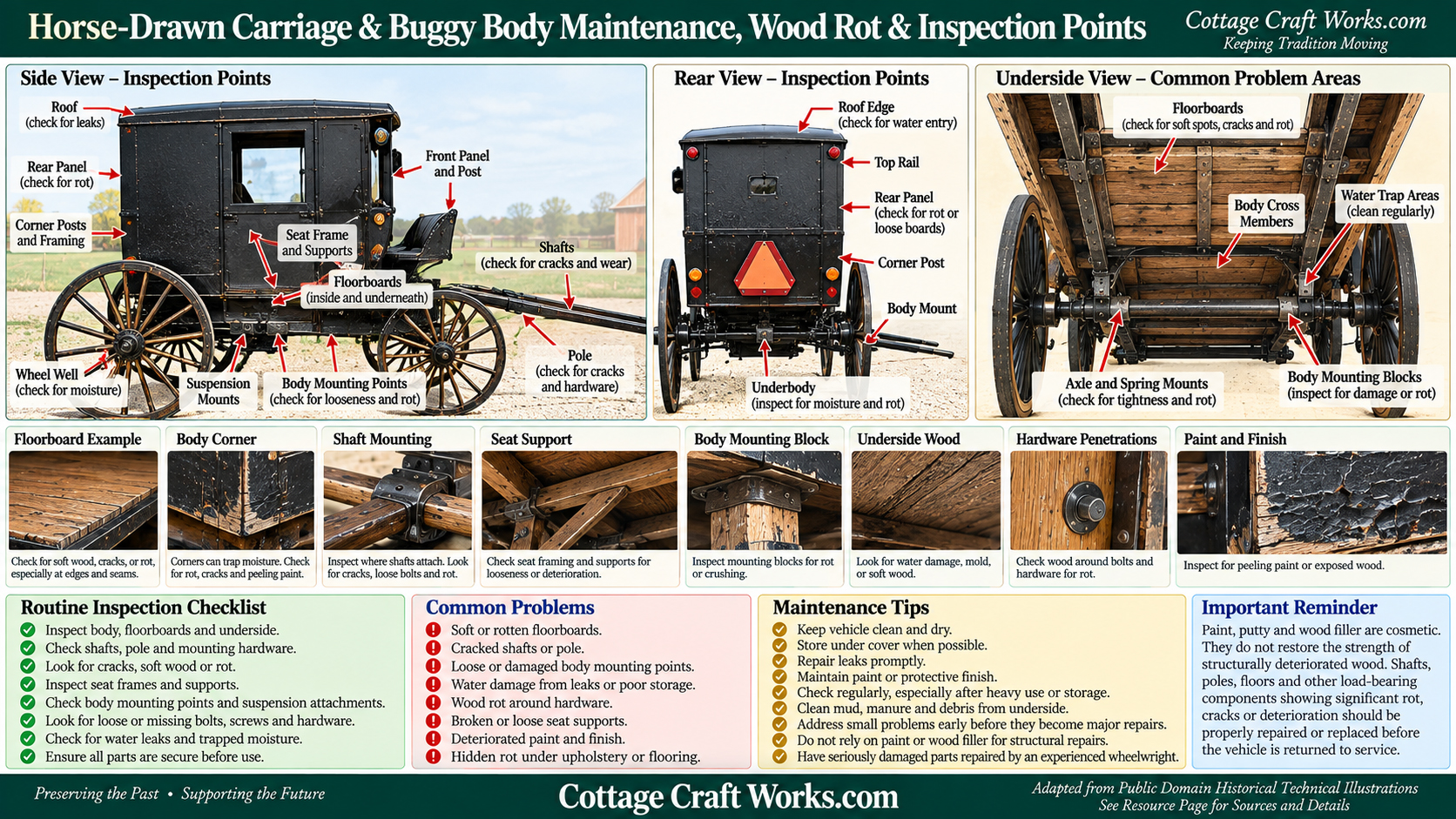
Clean and dry the vehicle, then inspect the body, floors, underside, shafts or pole, joints, mounting points, and wood around metal hardware. Look for soft wood, splits, failed finishes, loose fasteners, staining, and trapped moisture. Repair or replace structural deterioration rather than hide it with cosmetic filler or paint.
Resource 2
The painted body of a carriage or buggy can hide developing problems. Wood deterioration often begins where moisture remains trapped, where fasteners penetrate the wood, or where protective finishes have failed. Routine inspection should include the underside, joints, attachment points, and other areas not obvious during normal use. Although wagons, carriages, and buggies make interesting ornemantal yard decor exposing them them in the elements long term can make them unsafe to use as a working horse-drawn vehicle ever again. Wood spoke wheels are generally the first to give way to wood rot caused by water accumulating and soaking in around the bottom spokes and then have even quicker detrioration in thawing and freezing tempatures.
1. Clean Before You Inspect
Mud, manure, road salt, dust and oily residue can hold moisture against wood and metal and can hide cracks or failed finishes. Clean the vehicle gently and let it dry before doing a detailed inspection. Avoid forcing water into joints, seams or upholstery.
2. Inspect the Body From the Top Down
· Roof, top supports and weather coverings where fitted.
· Seat frame, seat base and body rails.
· Doors, steps and handholds.
· Body panels and structural framing.
· Floorboards and floor supports.
· Body-to-running-gear mounting points.
· Shaft or pole attachment areas.
· Underside surfaces, corners, and places where water or debris can collect.
3. What Wood Deterioration Looks and Feels Like
|
Condition |
What to Look For |
|
Surface checking |
Fine cracks following the grain. Note whether they are limited to the finish or extend deeply into a structural member. |
|
Open split |
A visible separation through the wood, especially concerning near bolt holes, bends, joints or loaded areas. |
|
Soft or punky wood |
Wood that dents, crushes, flakes or can be easily penetrated compared with surrounding sound wood. |
|
Discoloration/staining |
May indicate repeated moisture exposure. Investigate the source rather than relying on appearance alone. |
|
Loose fastener |
Movement around a bolt or screw can enlarge the hole and allow water to enter. |
|
Failed finish |
Peeling, cracking or missing paint/varnish exposes wood to moisture cycling and weathering. |
4. High-Risk Areas for Moisture and Rot
· End grain at the ends of boards, shafts and poles.
· Around bolts, screws, brackets and body-mount hardware.
· Floor edges and the underside of floorboards.
· Joints where two wooden members meet.
· Wood-to-metal interfaces where water can become trapped.
· Areas beneath upholstery or mats that stay damp.
· Lower body corners and splash zones.
· Previously repaired areas where water can enter around patches or filler.
5. Floors and Load-Bearing Wood
Floorboards do more than provide a walking surface. Depending on the vehicle, they may transfer occupant or cargo loads into framing and body supports. Check for springiness, cracking, loose boards, failed fasteners, and deterioration at supports. A board that looks acceptable from above may be damaged underneath.
6. Shafts and Poles Require Special Attention
Shafts and poles transmit important forces between the horse and vehicle. Inspect the full length, including the underside and attachment points. Pay close attention to bolt holes, bends, repaired areas, checks, and splits. A cosmetic coating should never be used to hide a structural defect.
7. Metal Hardware Can Damage Wood
Loose brackets and fasteners can work against the wood with every mile traveled. Corrosion can also expand around fasteners and retain moisture. Check for enlarged holes, dark staining, crushed wood beneath washers or brackets, and movement between hardware and the wooden member.
8. Paint and Protective Finishes
A sound coating helps limit direct weather exposure, but coating over damp, rotten or unsound wood does not restore strength. Clean and prepare sound wood appropriately before refinishing. Repair the source of water entry first. Historic-preservation guidance from the National Park Service emphasizes maintenance, proper surface preparation, and continued inspection of treated or repaired wood.
9. Storage and Moisture Control
· Store the vehicle under a sound roof whenever possible.
· Provide ventilation so trapped moisture can escape.
· Do not wrap a damp vehicle in an impermeable cover.
· Keep tires and wooden components away from standing water and persistent ground moisture.
· Clean mud and organic debris from the underside before storage.
· Inspect after long storage before hitching and driving.
10. Cosmetic Repair vs. Structural Repair
A small finish defect is not the same as a structural crack or rot. Wood filler, putty, epoxy surfacing, and paint may improve appearance or weather resistance in appropriate nonstructural applications, but they should not automatically be treated as replacements for sound structural wood.
If deterioration affects a shaft, pole, floor support, body mount or other load-bearing member, the safest course is to stop using the vehicle until the part has been properly evaluated and repaired or replaced.
Body Inspection Checklist
· Body sits squarely on the running gear.
· No new cracks, splits, or movement at body mounts.
· Floorboards are firm and securely attached.
· Shafts/pole are straight, sound, and securely mounted.
· Fasteners are secure without crushing surrounding wood.
· No soft wood or unexplained staining at joints and hardware.
· Paint or finish is intact enough to protect sound wood.
· Underside is clean and dry with no trapped debris.
· Previously repaired areas remained tight and dry.
Important Safety & Maintenance Disclaimer
This Cottage Craft Works resource is provided for general educational and informational purposes only. Horse-drawn carriages, buggies, wagons and carts vary substantially in age, construction, materials, wheel and axle design, steering systems, brakes, suspension, intended loads and operating conditions. A maintenance, inspection or repair procedure appropriate for one vehicle may not be appropriate for another.
Wheels, axles, bearings, hubs, fifth wheels, kingpins, steering components, brakes, springs, shafts, poles, wooden structural members and attachment hardware are safety-critical components. Failure or improper adjustment of these components can result in loss of vehicle control, property damage, serious injury, or death.
Always inspect the vehicle before use and follow the vehicle or component manufacturer's instructions when available. Properly support a raised vehicle before working underneath it or removing wheels. Do not rely solely on a jack or other lifting device to support a vehicle while performing maintenance.
Do not operate a horse-drawn vehicle when a wheel, axle, bearing, steering component, brake, shaft, pole, structural wooden member or other safety-critical component is damaged, excessively worn, loose, deteriorated or of questionable condition.
Repairs involving structural wooden wheels, hubs, spokes, felloes, shafts, poles, major body structures or specialized running gear should be performed or evaluated by an experienced wheelwright, carriage builder or other qualified craftsperson when the condition or proper repair procedure is uncertain.
Structural Wood Warning
Paint, coatings, wood filler, putty, epoxy or other cosmetic repairs should not be assumed to restore the original structural strength of deteriorated wood. Shafts, poles, floor supports, body mounting points and other load-bearing wooden components showing significant rot, cracking, splitting or deterioration should be properly evaluated and repaired or replaced before the vehicle is returned to service.
Cottage Craft Works LLC assumes no responsibility or liability for injury, property damage, equipment damage or other loss resulting from the inspection, maintenance, repair, modification, installation or operation of horse-drawn vehicles or their components.
Reference Sources
The following public or institutional references were used as background for this educational resource. Vehicle-specific manufacturer instructions should take precedence when available.
· U.S. National Park Service, Technical Preservation Services — Preservation Tech Notes. Provides practical preservation guidance on exterior woodwork, finishes, and maintenance.
· U.S. National Park Service / NCPTT — Guide for Use of Wood Preservatives in Historic Structures. Emphasizes correcting moisture and maintenance problems and continuing inspection of treated or repaired wood.
· University of Maine Cooperative Extension — Wagon Safety, Bulletin #2337. Recommends pre-season inspection and needed reconditioning or repairs.
Useful links
- Open link
Carriage-buggy-horse-drawn-carriage-buggy-wagon-parts