Thank you for Shopping with us at Cottage Craft Works, Celebrating 20 Years in Business

Article

How to Make an Herbal Tincture: Step-by-Step

How do you make an herbal tincture?

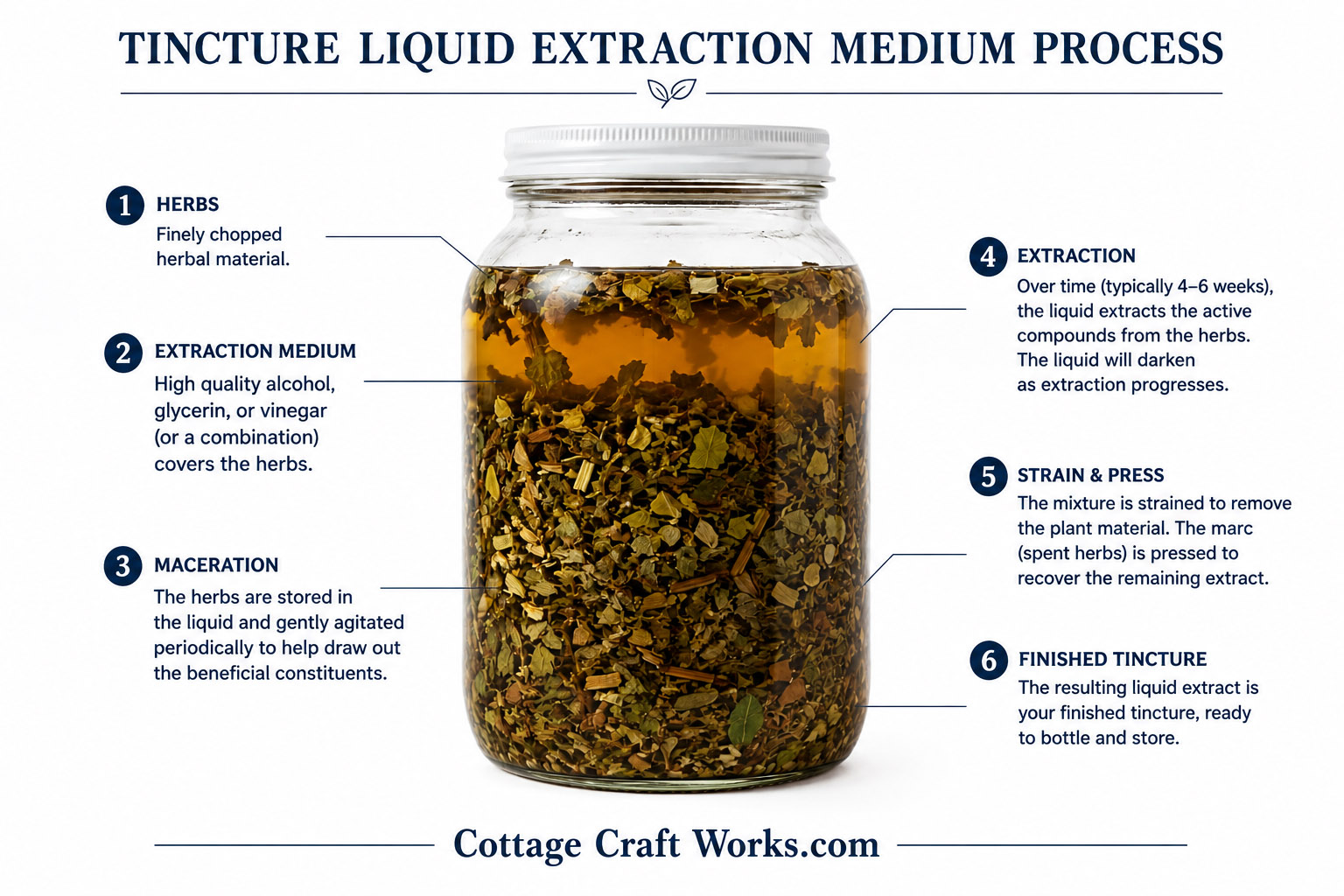
Prepare and measure the botanical, combine it with an appropriate extraction medium at a researched ratio, macerate it for the required period, strain and press the marc, filter the liquid, and bottle and label the finished extract.
How to Make an Herbal Tincture: Step-by-Step

A successful tincture starts with correctly identified botanical material and a researched extraction method. This guide explains the production workflow without assuming that one ratio or alcohol percentage works for every plant.

  1. Correctly identify the botanical and plant part.
  2. Determine whether fresh or dried material is appropriate.
  3. Research the appropriate extraction medium and concentration.
  4. Weigh the botanical.
  5. Measure the extraction liquid.
  6. Record the weight-to-volume ratio.
  7. Combine in a clean, suitable container, glass or stainless steel, and keep botanical material submerged.
  8. Macerate according to the formula; several weeks is common for traditional preparations.
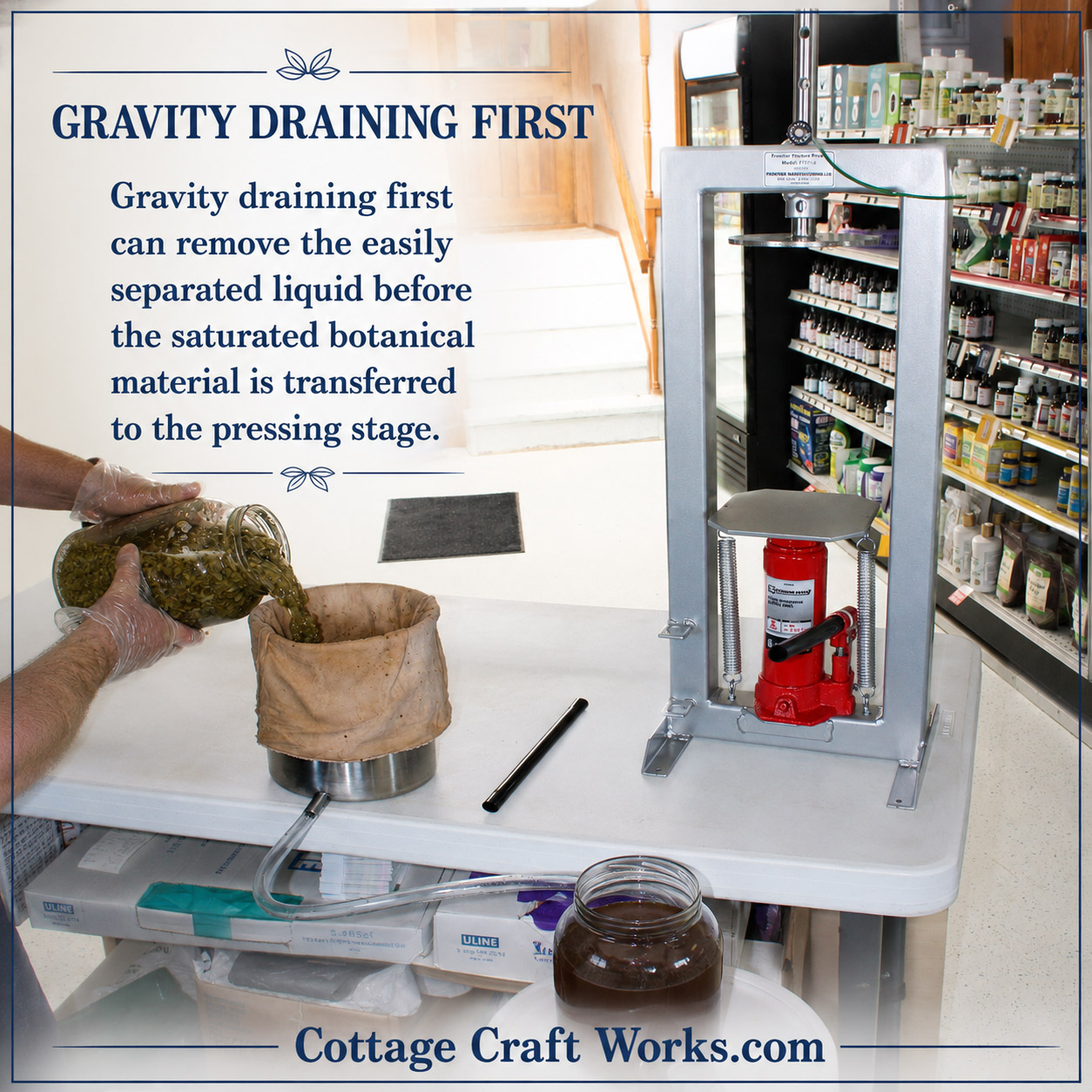
  9. Strain the liquid.
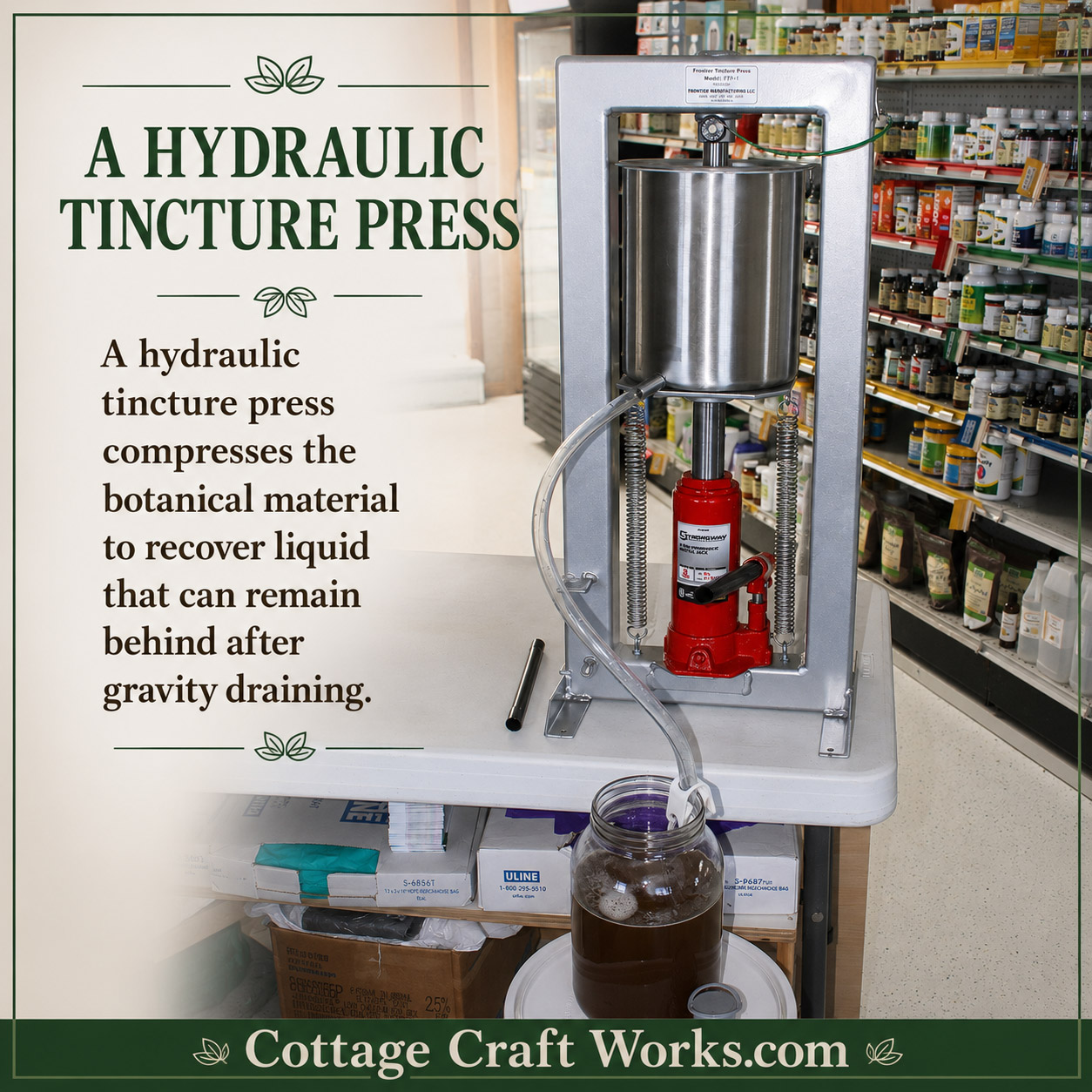
  10. Press the marc to recover retained extract.
  11. Filter if necessary.
  12. Transfer to clean bottles.
  13. Record botanical, plant part, ratio, extraction medium, dates, and batch number.
  14. Store according to the requirements of the finished preparation.

The commonly encountered 1:5 dried / 1:2 fresh ratios are useful examples for explaining notation, but they should not be presented as universal recipes because extraction requirements vary by botanical.

Disclaimer

This information is provided for educational purposes only and is not medical, legal, or regulatory advice. Regulations and requirements may change and vary by product, location, and intended use. Commercial producers are responsible for determining and complying with all current federal, state, and local requirements applicable to their products and operations.

Watch

  • Using Cottage Craft Works Tincture Presses

Photos
  • Tincture Liquid Extraction
    Tincture Liquid Extraction
  • Gravity Draining
    Gravity Draining
  • Pressing the Botanical Material
    Pressing the Botanical Material

Useful links

Frequently Asked Questions

What is maceration?
Maceration is the extraction process in which prepared herbs or other botanical material are soaked in a liquid extraction medium, commonly called the menstruum. During the soaking period, soluble plant constituents move into the liquid. The botanical material is typically kept submerged, and the container may be periodically agitated.
What does 1:5 mean?
A 1:5 tincture ratio generally means 1 part botanical material by weight to 5 parts extraction liquid by volume. For example, a 1:5 preparation could use 100 grams of dried herb with 500 milliliters of menstruum. The correct ratio varies by botanical and preparation, so 1:5 should not be treated as a universal recipe.
Fresh or dried herbs?
Either may be used depending on the botanical and desired preparation. Fresh herbs contain significant natural moisture, which affects the final concentration of the extraction liquid. Dried herbs contain less water and often require a different herb-to-liquid ratio. Follow a reliable formula developed specifically for the plant and plant part being extracted rather than simply substituting fresh herbs for dried herbs.
Why press the marc?
Marc is the wet plant material remaining after maceration and draining. It can retain a considerable amount of liquid extract. Pressing compresses the marc to recover liquid that gravity draining or ordinary hand squeezing may leave behind. As batch sizes increase, a hydraulic tincture press can also reduce manual labor and make the pressing process more consistent.
How long should extraction take?
Traditional macerated herbal tinctures are commonly allowed to extract for approximately 30 days. However, some will take 4-6 weeks. The extraction time depends on the botanical, plant part, whether it is fresh or dried, the extraction medium, particle size, and the specific method used. A researched formula for the specific botanical should take precedence over a universal extraction time.
Loading...
Loading...