
Article
Herbal Tincture Safety & Quality Control: From Botanicals to Bottling
How can herbal tinctures be made more safely and consistently?
Start with positively identified botanical material and the correct plant part, use suitable extraction ingredients and clean equipment, prevent cross-contamination, document each batch, maintain ingredient-to-finished-product traceability, store materials appropriately and research the safety and potential interactions of each botanical.
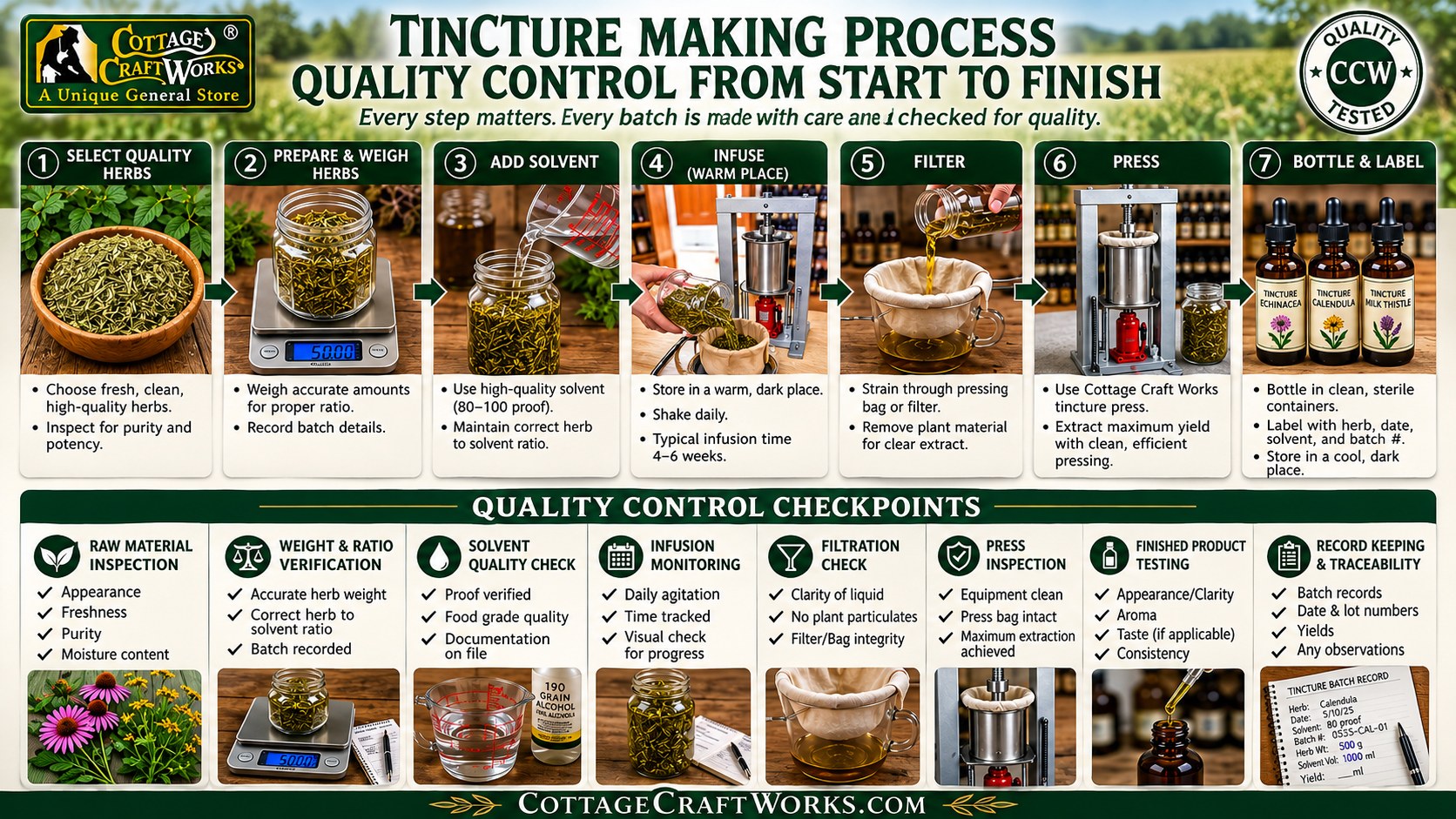
Quality tincture production begins before the herbs ever enter the extraction vessel.
Correct botanical identification, the correct plant part, reputable sourcing, food-grade extraction materials, clean equipment, documented batches, and appropriate storage all contribute to a controlled process.
For commercial producers, quality control should be designed into the workflow rather than performed only
1. Positive Botanical Identification
Know:
Genus/species → plant part → supplier → lot.
Common names alone can create ambiguity because different plants may share the same name.
2. Use the Correct Plant Part
Leaf, flower, root, bark, seed, and fruit from the same plant are not automatically interchangeable.
The formulation should identify the intended part.
3. Source Consistently
A reliable supplier should be able to provide consistent botanical identity and lot information.
Disclaimer
This information is provided for educational purposes only and is not medical, legal, or regulatory advice. Regulations and requirements may change and vary by product, location, and intended use. Commercial producers are responsible for determining and complying with all current federal, state, and local requirements applicable to their products and operations.
Commercial producers should establish receiving procedures rather than simply pouring newly received material into existing inventory.
4. Use Appropriate Extraction Materials
Ingredients contacting the product should be suitable for their intended use.
Do not assume every alcohol, glycerin, vinegar, oil, hose, plastic container, or processing component is appropriate simply because it is readily available.
5. Clean Equipment
Develop a repeatable cleaning procedure for:
- vessels;
- strainers;
- pressing bags;
- press components contacting product;
- collection containers;
- tubing;
- funnels;
- filling equipment.
6. Prevent Cross-Contamination
This becomes increasingly important when the same equipment processes different botanicals.
Consider production sequencing, cleaning, and storage of cleaned equipment.
7. Document Every Batch
Record what was produced, from what ingredients, when, and how.
The purpose isn't paperwork for its own sake.
It is to answer:
What happened in this particular batch?
8. Establish Traceability
A strong system connects:
Supplier → botanical lot → extraction batch → pressing/filtration → finished-product lot → bottles.
9. Monitor Storage
Storage conditions can affect ingredients, packaging, and finished preparations.
Establish conditions appropriate to the material rather than assuming that every botanical preparation has identical storage requirements.
10. Watch for Product Changes
Unexpected:
- odors;
- gas formation;
- container swelling;
- visible growth;
- unusual separation;
- dramatic color changes;
- packaging failures
should trigger investigation rather than simply being ignored.
Not every color change indicates spoilage, but unexpected changes deserve evaluation.
11. Consider Interactions and Individual Safety
“Natural” does not mean universally safe.
Botanicals can have adverse effects and can interact with medications. Product safety can also vary depending on the individual and the preparation.
For personal medicinal use, questions involving pregnancy, nursing, children, medications, significant medical conditions, or suspected reactions are appropriate situations for consultation with a qualified healthcare professional.
Commercial Quality Systems
Commercial dietary supplement production may fall under federal current good manufacturing practice requirements, depending on the product and activity. Businesses should determine the regulations applicable to their operation rather than treating a general web resource as a compliance checklist.
Disclaimer
This information is provided for educational purposes only and is not medical, legal, or regulatory advice. Regulations and requirements may change and vary by product, location, and intended use. Commercial producers are responsible for determining and complying with all current federal, state, and local requirements applicable to their products and operations.
Photos
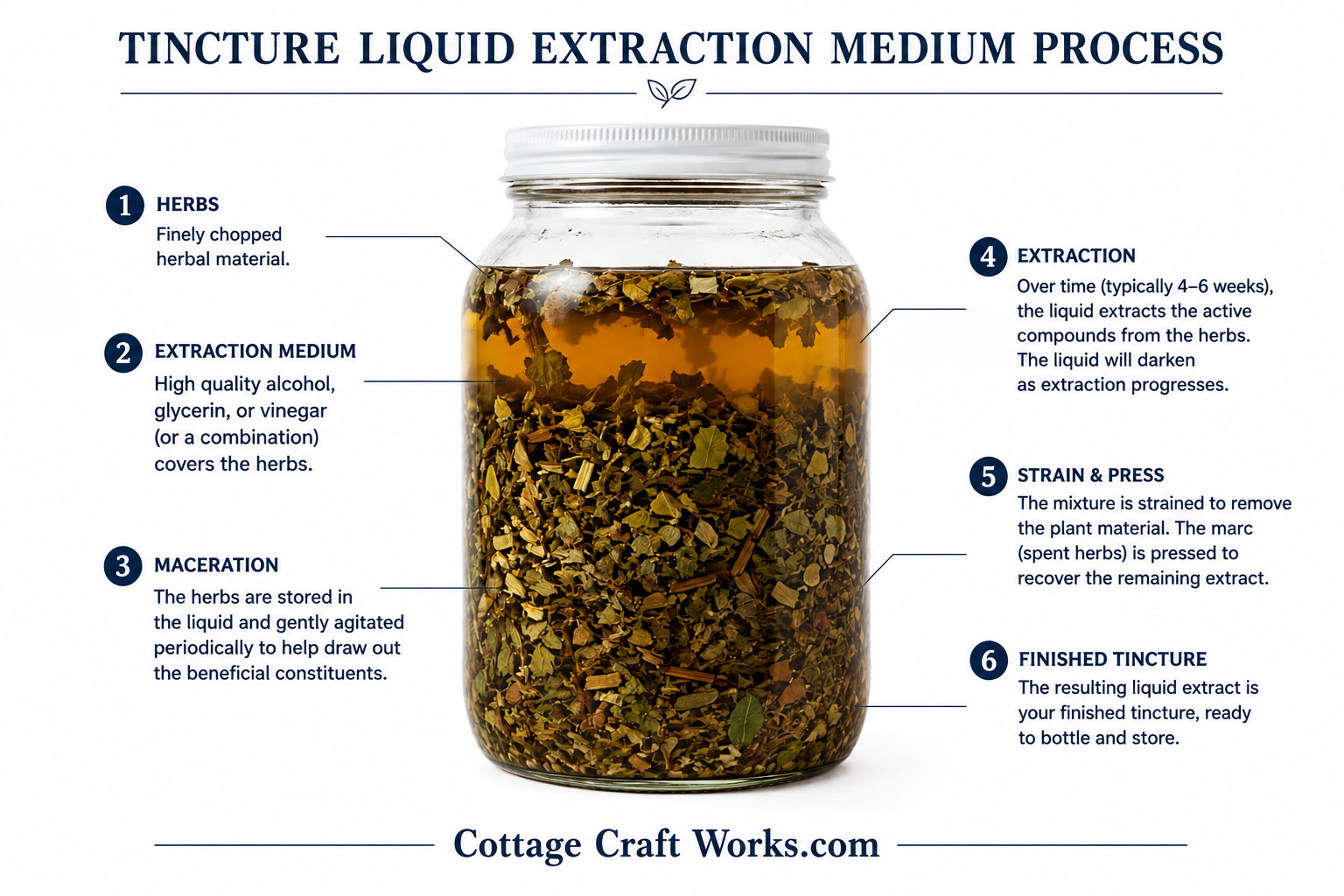
Using Quality Control Checks in Tincture Processing