

Banks experiencing service disruptions. Apple users unable to sign in. Thousands of airline flights disrupted by a nationwide FAA ground stop.
Updated November 17, 2026 | Cottage Craft Works
The recent wave of technology outages across the United States is a powerful reminder of how much we depend on electricity, computers, communications networks, and digital services to function in everyday life.
While these incidents have not been shown to be connected, they raise an important question:
What would happen if your home lost electricity, your water well stopped pumping, and electronic payment systems were unavailable at the same time?
At Cottage Craft Works, we believe emergency preparedness starts with having practical, dependable alternatives when modern conveniences stop working.
From portable generator carts to manually operated water pumps and traditional non-electric equipment, preparing before an emergency can make a significant difference.
Recent Nationwide Technology Outages: What Happened?
November 13: FAA Nationwide Ground Stop Disrupts Air Travel
On November 13, 2026, the Federal Aviation Administration issued a nationwide ground stop after technical problems disrupted critical communications infrastructure.
According to the FAA, instability in its telecommunications network affected air traffic operations. The agency halted departures as a safety precaution and resumed air traffic later that evening.
The disruption illustrated how problems with critical communications equipment can affect transportation nationwide.
November 16: Major Banks Experience Online Banking Disruptions
On November 16, customers reported difficulties accessing online banking services and completing certain transactions.
Reports involved JPMorgan Chase and customers of other major banks, including Wells Fargo, U.S. Bank, and Bank of America, along with some Zelle payment delays.
Chase identified a technical issue affecting transaction processing and said it was not a cyberattack. Some other financial institutions reported that their own systems remained operational despite customers experiencing payment problems.
Imagine needing emergency supplies but being unable to complete an electronic payment.
Keeping a reasonable amount of emergency cash at home, in a secure location, can provide another payment option when digital systems are unavailable.
November 17: Apple Sign-In, iCloud, and Apple Pay Problems
On November 17, Apple users reported problems with several services, including iCloud account sign-ins, Apple Pay, and the App Store.
Some users encountered verification errors or were unexpectedly signed out of their accounts.
The disruption demonstrated another vulnerability of relying entirely on connected devices and online accounts.
If important documents, emergency contacts, or payment information are only available through online services, an unexpected outage could make them temporarily inaccessible.
The lesson is simple: maintain offline backups of essential information and supplies.
What If the Next Outage Is Your Electricity?
A technology outage does not automatically mean the electrical grid will fail. However, both types of disruptions demonstrate why having backup options is important.
Severe thunderstorms, hurricanes, tornadoes, winter storms, equipment failures, and other emergencies can interrupt electrical service for hours or even days.
Without electricity, households may lose access to:
- Refrigerators and freezers
- Electric water well pumps
- Heating and air-conditioning equipment
- Electric stoves and kitchen appliances
- Internet routers and home communications
- Battery chargers and other essential devices
- Certain medical equipment
For rural homeowners, homesteaders, and families who depend on private water wells, a power outage can also become a water emergency.
Here are several ways to prepare before the next storm or unexpected disruption.
1. Prepare an Emergency Backup Generator
A portable generator can provide temporary electrical power during an outage when properly sized, installed, and operated.
Depending on its capacity, a generator may help operate essential equipment such as refrigerators, freezers, lights, and compatible water pumps.
But portable generators can be heavy and difficult to move, especially across driveways, yards, and uneven surfaces.
Make Your Generator Easier to Move With a Generator Cart
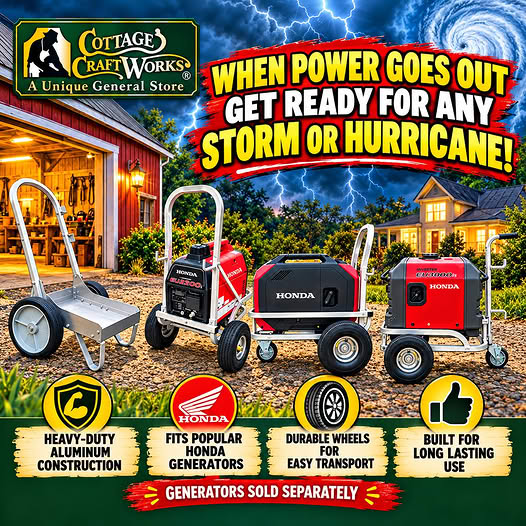
Cottage Craft Works offers generator and equipment cart options designed to help move compatible equipment around your property.
A properly selected cart can make transporting a heavy generator more convenient when preparing for an emergency.
Shop Generator & Equipment Carts:
View Generator Carts at Cottage Craft Works
Before purchasing, verify the generator’s weight, dimensions, and compatibility with the cart.
Generator Safety: Never operate a gasoline, propane, or diesel generator indoors, inside a garage, or near doors, windows, or vents. Operate it outdoors at least 20 feet from the home when possible, with exhaust directed away from occupied areas. Install working carbon monoxide detectors. Never connect a portable generator directly to household wiring without properly installed transfer equipment.
2. Prepare for Water Well Failure During a Power Outage
For millions of rural households, a private water well is an essential part of everyday living.
However, most modern electric well pumps require electricity to operate.
When the power goes out, your well pump may stop delivering water to your home.
This can leave your family without running water for drinking, cooking, cleaning, or sanitation once stored pressure is depleted.
Consider a Manual Hand Water Pump as an Emergency Backup
Traditional hand-operated water pumps offer an alternative way to move water without depending on an electric motor.
Cottage Craft Works carries Heller-Aller manual water pump options for different applications, including shallow wells, cisterns, and certain deep-well systems.
Depending on the pump design, these traditional systems can be useful for:
- Rural homes and homesteads
- Emergency water access
- Cistern and rainwater storage systems
- Cabins and off-grid properties
- Farms and remote locations
- Backup water pumping applications
Shop Manual Water Pumps:
Browse Heller-Aller Hand Water Pumps
Choosing the Right Emergency Hand Pump
Not every manual pump works with every well.
A shallow-well suction pump generally cannot lift water from more than approximately 25 feet below the pump at sea level, and practical limits may be lower.
Deep-well hand pump systems use a different pumping arrangement, with the working cylinder positioned below the water level.
Before choosing a pump, determine your well’s casing diameter, static water level, pumping water level, available installation space, and existing plumbing configuration.
A manual pump may require a separate installation and may not be compatible with your existing electric pump arrangement.
Important: Use a qualified well professional when necessary, protect the well against contamination, and test water for safety before drinking it.
3. Keep Emergency Drinking Water Available
Even if you have a backup pump, stored drinking water should remain part of your emergency preparedness plan.
A good starting point is at least one gallon of water per person per day for a minimum of three days, with additional water for hot weather, pets, medical needs, and sanitation.
A two-week supply is preferable when storage space allows.
Use food-grade containers and rotate stored water according to appropriate storage guidelines.
If your well loses pressure or is exposed to flooding, do not assume the water is safe to drink without appropriate testing or treatment.
4. Prepare for Banking and Electronic Payment Outages
The November banking disruptions remind us that access to money can be interrupted even when our funds remain secure.
During a widespread electricity or communications outage, ATMs, card terminals, and electronic payment systems may also become unavailable.
Consider keeping a modest emergency cash reserve in small denominations.
Maintain printed emergency contact numbers, know alternative ways to reach your financial institutions, and keep records of essential payments.
Never attempt to resolve an outage by clicking suspicious text messages or emails claiming your account requires immediate verification.
5. Keep Non-Electric Tools and Kitchen Equipment Available
Many households depend on electric appliances for almost every daily activity.
But traditional tools and manually operated equipment can still perform important tasks without electricity.
Hand-crank kitchen appliances, manual food preparation tools, and other non-electric equipment can help families remain functional during temporary outages.
These items are also useful for everyday homesteading, camping, rural living, and reducing dependence on electricity.
Explore Off-Grid Living Resources:
Explore the Cottage Craft Works Resource Center
6. Build an Emergency Power Outage Kit Before You Need It
Emergency preparedness is easier when essential supplies are organized and accessible.
Your household emergency kit should include:
- Battery-powered flashlights and spare batteries
- Battery-powered or hand-crank weather radio
- Drinking water and shelf-stable food
- First-aid supplies and necessary medications
- Portable phone charging banks
- Emergency cash
- Printed contact numbers and important documents
- Blankets and weather-appropriate clothing
- Manual can opener and basic hand tools
- Generator supplies and approved fuel storage, if applicable
- A practical backup water plan
Test your backup equipment periodically rather than waiting until a storm is approaching.
7. Don’t Wait Until the Next Emergency
When a major storm approaches, stores may quickly run short of generators, batteries, bottled water, and emergency supplies.
Preparing ahead of time gives you an opportunity to research equipment, determine what works for your property, and learn how to use it safely.
For families who rely on electric well pumps, this is especially important.
A generator may provide backup electricity, while an appropriately installed manual water pump may offer an additional source of water without electricity.
These are different solutions that can complement one another.
Frequently Asked Questions About Power Outages and Emergency Preparedness
What should I do before a power outage?
Store emergency water and food, charge portable batteries, check flashlights, prepare emergency cash, and make a backup power plan. If you own a generator, test it safely before an emergency.
Can I use a generator to run my water well pump?
Possibly. The generator must provide sufficient running and starting power for the pump and must be connected safely using appropriate equipment. Consult a qualified electrician or well professional.
Can a hand water pump work without electricity?
Yes. A properly installed manual pump uses human power instead of an electric motor. The correct design depends on the water depth, well configuration, and installation requirements.
Will a Heller-Aller hand pump work with my existing electric well?
Compatibility depends on your well casing, water level, existing pump, and available installation space. Some systems require separate plumbing or significant modifications. Consult a qualified well installer.
How much emergency water should I store?
Plan for at least one gallon per person per day for three days as a minimum, and preferably enough for two weeks when possible.
Are the recent banking, Apple, and FAA outages connected?
As of November 17, 2026, there is no verified evidence that these incidents share a common cause. Authorities and affected companies have described separate technical problems, and the FAA has stated that its disruption showed no indication of a cyberattack.
What emergency supplies should every rural homeowner consider?
In addition to food, water, first aid, and lighting, rural homeowners should evaluate backup electricity, well-water access, communications, heating, and equipment needed to maintain their property during an extended outage.
Be Prepared Before the Next Storm or Power Outage
The recent banking, Apple, and FAA disruptions demonstrate how dependent our daily lives have become on complex technology.
Although these incidents were not electrical grid failures, they offer a timely reminder to think about what happens when systems we normally take for granted become unavailable.
Preparedness isn’t about expecting the worst. It’s about having practical alternatives when unexpected problems occur.
Whether you’re preparing for severe weather, planning emergency backup electricity, or exploring ways to access water without an electric pump, Cottage Craft Works offers traditional equipment and resources to help you become more self-sufficient.
Start Preparing Today:
Shop Generator & Equipment Carts
Shop Heller-Aller Manual Water Pumps
Explore Off-Grid Living & Emergency Preparedness Resources
Cottage Craft Works — Traditional Tools, Off-Grid Equipment & Practical Solutions for Self-Sufficient Living.