
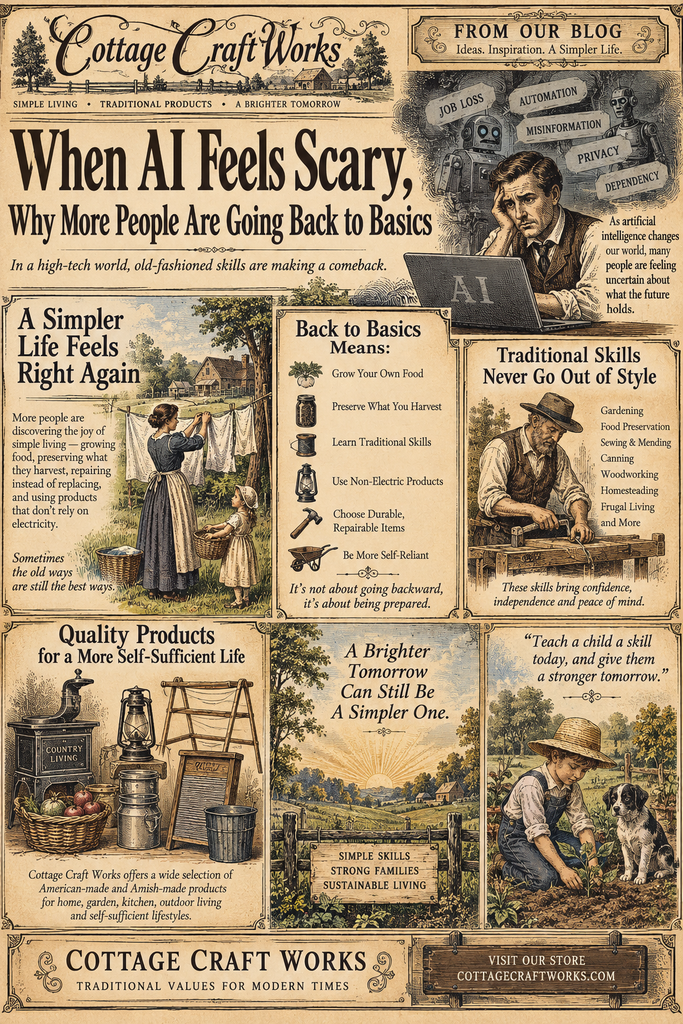
Artificial intelligence is changing the world at an incredible pace.
AI can write articles, create pictures, answer questions, analyze information, automate business tasks and increasingly perform work that once required a person.
For some people, that progress is exciting.
For others, it is unsettling.
A 2026 Pew Research Center survey found that 52% of U.S. adults said they were more concerned than excited about the increasing use of artificial intelligence in daily life. The same research found that 71% believed AI would lead to fewer jobs in the United States over the next 20 years.
Anthropic’s own public survey of nearly 52,000 Americans found that job loss was the most commonly reported fear about AI, followed by concerns about cognitive dependency and misinformation.
But there is another interesting response to a rapidly changing technological world:
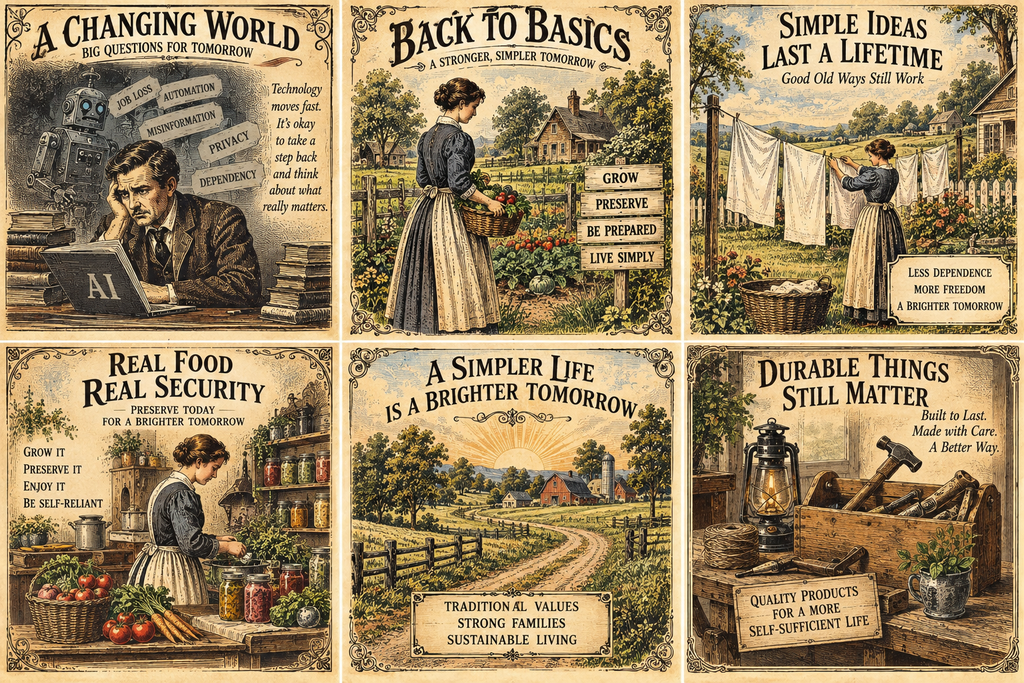
Some people are looking backward.
Not because they necessarily want to reject technology altogether.
Instead, they are rediscovering the value of knowing how to do things for themselves.
They are growing gardens.
They are preserving food.
They are learning traditional skills.
They are looking for products that don’t require electricity.
They are hanging clothes on a clothesline instead of automatically reaching for a dryer.
They are repairing things instead of throwing them away.
They are interested in homesteading, sustainable living and a self-sufficient lifestyle.
And that is where the idea of “going back to basics” becomes especially interesting.
The Technology Revolution Is Making People Think About What Really Matters
Artificial intelligence is only the latest development in a much larger technological transformation.
For decades, everyday life has become increasingly automated.
We use smartphones to communicate.
We use online banking instead of visiting a bank.
We order groceries from an app.
We stream entertainment rather than purchasing physical media.
We use GPS instead of maps.
We increasingly depend on computers and connected devices for work, shopping and communication.
AI takes that trend another step.
Instead of simply using technology as a tool, people are beginning to ask:
How much of our lives should depend on technology?
That is an important question.
The answer will be different for everyone.
But one response is becoming increasingly attractive: learn the skills and use the tools that allow you to be more self-reliant.
What Does “Going Back to Basics” Really Mean?
Going back to basics doesn’t necessarily mean abandoning modern life.
It can mean becoming more capable.
It can mean knowing how to preserve food.
It can mean growing vegetables.
It can mean sewing a button back onto a shirt.
It can mean drying clothes without a dryer.
It can mean having a way to cook, light your home or perform everyday tasks when electricity isn’t available.
It can mean choosing a durable product that can be repaired instead of purchasing something disposable.
It can also mean slowing down.
The modern idea of sustainable living isn’t necessarily about living without technology.
It’s about being thoughtful about the resources we use and becoming less dependent on systems we don’t control.
The Appeal of a Self-Sufficient Lifestyle
Self-sufficient living has traditionally been associated with farms, homesteads and rural communities.
But you don’t have to own 100 acres to practice self-sufficiency.
A family living in the suburbs can learn many of the same skills.
A small garden can provide vegetables.
A pantry can hold preserved foods.
A clothesline can reduce reliance on an electric dryer.
A sewing machine can extend the life of clothing.
Hand tools can accomplish many jobs without power.
Traditional food-preparation equipment can reduce dependence on highly automated appliances.
These aren’t necessarily dramatic lifestyle changes.
They’re small steps toward self-reliance.
And those small steps can add up.
Why Non-Electric Products Are Becoming Interesting Again
One of the most interesting parts of the back-to-basics movement is the renewed interest in products that don’t require modern electrical technology.
Consider something as simple as a clothesline.
For generations, people dried their clothes outside.
Today, many households automatically put everything into an electric dryer.
Neither approach is inherently right or wrong. But having the ability to dry clothes without electricity gives a household another option.
The same idea applies to food preparation, gardening, lighting, sewing and other everyday activities.
Cottage Craft Works specifically offers a selection of self-sufficient living products, including non-electric and off-grid products, drying racks, lamps, fans, sewing equipment and other traditional household products.
That’s part of what makes the back-to-basics movement different from simply buying another modern gadget.
The goal isn’t always to find the newest technology.
Sometimes it’s to find a better way to depend on yourself.
Why People Are Looking for Amish-Made and American-Made Products
There is also a growing appreciation for craftsmanship.
In a world where many products are mass-produced, disposable and designed around convenience, handcrafted products can feel different.
People may appreciate:
- Traditional craftsmanship
- Durable construction
- Repairable products
- Simple mechanical designs
- American-made products
- Amish-made products
- Products designed around practical use
- Products that don’t rely entirely on electronics
Cottage Craft Works describes itself as a provider of self-sufficient American-made products and offers categories ranging from home goods and farm and garden products to kitchen and food preparation, horse and buggy products, artisan crafts and building products.
Its history is also rooted in the back-to-basics lifestyle. The company says Paul and Liz Stevens have spent more than 35 years using Amish-made products and seeking out products related to home food preservation, gardening and frugal living.
That history helps explain why a store like Cottage Craft Works fits naturally into today’s renewed interest in self-sufficient living.
Maybe the Future Isn’t About Choosing Technology or Tradition
There is an interesting possibility.
Perhaps the future isn’t going to be technology versus traditional living.
Perhaps it will be both.
A person can use artificial intelligence at work and still grow a garden at home.
Someone can use a smartphone while learning to preserve vegetables.
A family can order something online while choosing products designed to reduce electricity consumption.
You can use modern technology without allowing technology to become the only way you know how to accomplish something.
That may be the real meaning of self-sufficiency.
Having options.
The Importance of Knowing How to Do Things Yourself
Imagine a future where the internet is temporarily unavailable.
Or the power goes out.
Or a piece of technology stops working.
Or a household simply wants to reduce its dependence on electricity.
Knowing traditional skills suddenly becomes valuable.
How do you preserve food?
How do you repair something?
How do you grow food?
How do you cook without relying on every modern appliance?
How do you keep clothing clean and dry?
How do you sew?
How do you maintain your home?
These aren’t outdated questions.
They’re practical questions.
And learning the answers can provide something that technology cannot completely replace:
confidence in your own abilities.
Cottage Craft Works and the Return to Simple Living
This is one reason people interested in sustainable living, self-sufficient living and simple country life may find Cottage Craft Works interesting.
The company describes itself as a modern version of the old-fashioned general store — a place where people could find useful products, tools and equipment for everyday life.
Today, those products can be viewed and purchased online, but the philosophy remains rooted in practicality.
Cottage Craft Works carries products for:
- Self-sufficient living
- Home and household use
- Farm and garden
- Food preparation
- Traditional crafts
- Building
- Outdoor living
- Vintage farm equipment parts
- Off-grid and non-electric applications
Its self-sufficient living selection includes items such as laundry drying equipment, 12-volt fans, lamps, traditional sewing equipment and other products intended for sustainable or off-grid lifestyles.
Explore Cottage Craft Works’ Self-Sufficient Living Products
The Back-to-Basics Movement Is About More Than Fear
It’s easy to look at artificial intelligence and become frightened about where technology might take society.
There are legitimate questions about employment, misinformation, privacy, cybersecurity, dependence on technology and how quickly AI is developing. Current reporting also shows continuing debate about the safety of increasingly capable AI systems.
But fear doesn’t have to be the response.
Another response is preparation.
Learn something.
Grow something.
Build something.
Repair something.
Preserve something.
Teach your children a practical skill.
Spend an afternoon working in the garden.
Learn how to sew.
Learn how to make something from scratch.
Find a product that doesn’t need an app, a subscription or an internet connection.
Sometimes the best response to a complicated future is to become a little more capable yourself.
Simple Living May Be the Next Big Thing
The future may bring incredible technology.
Artificial intelligence will probably continue changing the way people work, communicate and live.
But that doesn’t mean traditional skills are becoming worthless.
In fact, the opposite may happen.
As technology becomes more powerful, knowing how to live without depending completely on technology could become increasingly valuable.
That’s the philosophy behind self-sufficient living.
It’s not necessarily about rejecting the modern world.
It’s about maintaining a connection to the skills, products and traditions that worked long before smartphones, algorithms and artificial intelligence became part of everyday life.
And perhaps that’s why the old-fashioned idea of back-to-basics living feels surprisingly modern again.
Sometimes moving forward means remembering what we already knew.
Discover the Back-to-Basics Lifestyle
For more than 20 years, Cottage Craft Works has brought together products inspired by traditional craftsmanship, sustainable living, self-sufficiency and simple country life.
Cottage Craft Works — bringing a little more self-sufficiency, craftsmanship and simplicity back into everyday life.